My day has been hectic so I'm just going to post this new video (just uploaded on Tuesday!) from Golf Monthly's tech writer Jake O'Reilly. It's a nice overview of what you should know when you go to get your club shafts fitted to you -- not just your driver, but ALL your clubs. It's about six-and-a-half minutes long and it's got a lot of info in it.
Today I'm just posting it -- because of time problems -- but I plan to come back to it soon and summarize some of the most important info. Because this IS important info that can save you a lot of headaches.

Showing posts with label equipment. Show all posts
Showing posts with label equipment. Show all posts
Thursday, June 21, 2018

Saturday, May 19, 2018
Long Irons VS Hybrids VS Driving Irons (Video)
Well, the video covers part of today's post. The video is a GOLFTEC lesson from GC that explains the difference between long irons and hybrids, as well as why you might want to sub one for the other. The stats about pros in the video are fascinating.
Perhaps the biggest thing to take away from this video is that, even though they have the swing speed to get away with it, a large number of pros carry nothing longer than a 4-iron and that many -- perhaps most -- amateurs are better off with nothing longer than a 5-iron.
And how do you know if you're carrying a long iron that's "too long" for you? Just check the gaps between your clubs. When the gaps become too small, that's where you should probably consider replacing long irons with hybrids.
But this video doesn't address driving irons, which are getting a lot of attention during TV broadcasts lately. For that I went to this post at the GOLFTEC site. It's an older post but it gives us the basics.
Driving irons fit between long irons and hybrids -- more forgiving than the former but not as much as the latter. The driving iron creates a lower trajectory than a hybrid for shots in the wind -- or, as many of the pros are using them for, hitting stinger shots when they can't control their drivers -- while still being easier to hit than those pesky long irons.
Unless you have a high clubhead speed, your best bet for low shots into the wind or for stinger shots is to take a longer, higher-lofted club -- a hybrid or a fairway wood -- and use a three-quarter swing. This will give you the best combination of distance and forgiveness.
Of course, if you have a 120mph swing, you can hit any kind of club you want. But unless you do, hybrids are probably the way to go.
Perhaps the biggest thing to take away from this video is that, even though they have the swing speed to get away with it, a large number of pros carry nothing longer than a 4-iron and that many -- perhaps most -- amateurs are better off with nothing longer than a 5-iron.
And how do you know if you're carrying a long iron that's "too long" for you? Just check the gaps between your clubs. When the gaps become too small, that's where you should probably consider replacing long irons with hybrids.
But this video doesn't address driving irons, which are getting a lot of attention during TV broadcasts lately. For that I went to this post at the GOLFTEC site. It's an older post but it gives us the basics.
Driving irons fit between long irons and hybrids -- more forgiving than the former but not as much as the latter. The driving iron creates a lower trajectory than a hybrid for shots in the wind -- or, as many of the pros are using them for, hitting stinger shots when they can't control their drivers -- while still being easier to hit than those pesky long irons.
Unless you have a high clubhead speed, your best bet for low shots into the wind or for stinger shots is to take a longer, higher-lofted club -- a hybrid or a fairway wood -- and use a three-quarter swing. This will give you the best combination of distance and forgiveness.
Of course, if you have a 120mph swing, you can hit any kind of club you want. But unless you do, hybrids are probably the way to go.
Wednesday, May 2, 2018
The Skinny on Tiger's New Irons
Ever since he tweeted the photo of his new "TW Phase1" irons -- and yes, that's what TaylorMade is calling them for now, to differentiate them from future tweaks -- everybody wants to know what's up with Tiger's new sticks. Let's see if we can shed some light on things.
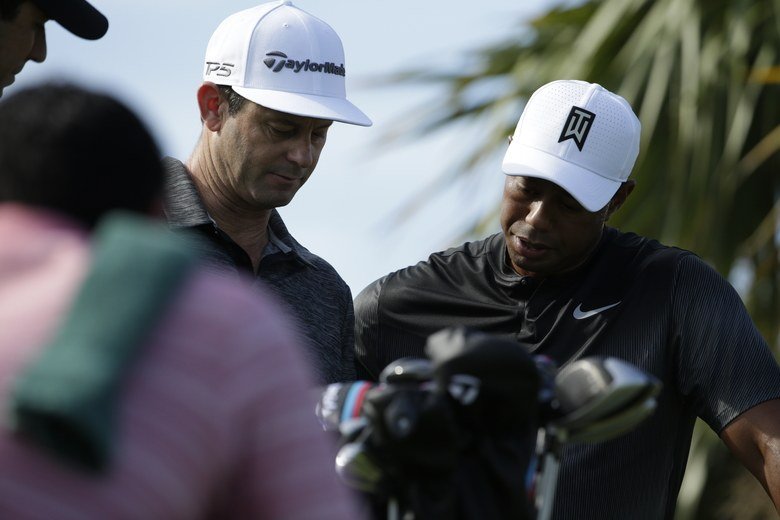
The photo above came from a golfdigest.com article in early January. It shows Tiger and TaylorMade VP of Tour Operations Keith Sbarbaro hard at work during one of their early test sessions. I'd advise you to read the whole article, because it will give you a clear view of how Tiger -- and, I suppose, any tour pro -- goes about getting fitted for clubs when they sign a new mega-million dollar equipment deal.
I was interested to learn that Tiger is able to tell slight differences in clubs because he has played the same specs for so long:
Golf Digest also notes that while Tiger's primary concern is trajectory -- big surprise, right, given how much he talks about it -- he was able to identify slight differences in feel as well, and was able to easily discuss the science behind those discrepancies. I suspect that's part of the reason Tiger and Bryson DeChambeau have been playing practice rounds together so much. Swing geeks love to talk equipment!
Also noted: Tiger wants his clubs to look a certain way. He likes a muscleback iron with a longer blade length, thinner sole and a squared-off toe. And he likes a smaller head on his driver.
Here are a couple of other articles that you might want to take a look at.
I suspect we'll be hearing more about the irons before the week is over. But at least you'll have some idea what all the fuss is about.
The photo above came from a golfdigest.com article in early January. It shows Tiger and TaylorMade VP of Tour Operations Keith Sbarbaro hard at work during one of their early test sessions. I'd advise you to read the whole article, because it will give you a clear view of how Tiger -- and, I suppose, any tour pro -- goes about getting fitted for clubs when they sign a new mega-million dollar equipment deal.
I was interested to learn that Tiger is able to tell slight differences in clubs because he has played the same specs for so long:
Woods is well-equipped to notice anything amiss with his irons. He has used the same iron specs since he was a kid, saying he only changed the lie angle at times when a swing change called for it. He’s also aware that alterations are easier to make today, recalling that during his early years as a pro he would need to go through eight or nine sets of irons and cherrypick clubs from each set to get the CGs to match.That's interesting, don't you think? We tend to believe Tiger makes wholesale changes in his game every so often, but it's clear that he never makes changes that affect his impact position too much. If it did, he'd have to make major equipment changes. That could explain how Tiger managed to make so many swing changes successfully when most players have trouble making a single change.
Golf Digest also notes that while Tiger's primary concern is trajectory -- big surprise, right, given how much he talks about it -- he was able to identify slight differences in feel as well, and was able to easily discuss the science behind those discrepancies. I suspect that's part of the reason Tiger and Bryson DeChambeau have been playing practice rounds together so much. Swing geeks love to talk equipment!
Also noted: Tiger wants his clubs to look a certain way. He likes a muscleback iron with a longer blade length, thinner sole and a squared-off toe. And he likes a smaller head on his driver.
Here are a couple of other articles that you might want to take a look at.
I suspect we'll be hearing more about the irons before the week is over. But at least you'll have some idea what all the fuss is about.
Tuesday, March 6, 2018
Some Thoughts on the Distance Debate
As I was watching Golf Central yesterday, I couldn't help but be surprised at some of the things that Geoff Shackelford, Jaime Diaz and Matt Adams said about the various statements that have come out from the USGA, the R&A, the PGA Tour and the PGA regarding the distance study. So I thought I'd note a few things that I believe have been forgotten in this discussion.
In case you haven't heard, the USGA and the R&A released a report Monday which they say shows an unusual jump in the distances golf balls carry on six of the seven tours that were studied. Most thought this report indicated consideration of new rules to "roll back" the golf ball. Here's a link to Golf Channel's post about that report, with a link to the report itself in it.
The first thing that surprised me was the panel's general belief that the statements from the PGA Tour and the PGA probably meant that any meaningful discussions would be stymied. Why? Because the statements made it pretty clear that the ruling bodies and the "playing bodies" had opposing views.
That makes no sense at all to me. We all know that each of the interested parties in this discussion has their own agenda. That's nothing new in any situation like this because the movers and shakers in any discussion have something at stake, and we know that they're always going to take stances to defend those stakes.
In my opinion, knowing what those stances are in advance make it easier to discuss things, not harder. If they made statements that indicated they didn't care one way or the other about the outcome, they would only be saying what they thought others wanted to hear and not what they meant. Knowing where everyone stands up front should make it easier for them to uncover the issues — the real issues — and perhaps make progress toward a solution.
Of course, it's unlikely that any real progress will be made toward a solution anytime soon. The reason? Because the only logical solution involves bifurcation of the rules, and to do that eliminates one of the things that really differentiates our sport from other sports. As it stands, amateurs and pros can compete against each other using handicaps, because handicaps take into account the things that differentiate an amateur's game from a pro's game.
You know, things like differences in driving distance.
But once you bifurcate the equipment, you eliminate even the possibility of a handicap. In fact, you eliminate the very thing which allows amateurs and pros to compete together. Because if they use different equipment, their games don't have enough in common to allow a usable comparison of their games. So the argument that bifurcation of the equipment is necessary to maintain the integrity of the game is actually a faulty one, because the ability of pros and amateurs to compete together is an integral part of our sport.
But that's only the beginning of the problems. Because the basic assumption — that rolling back the ball's distance will mitigate some of the challenges our game faces — is shortsighted.
One of the concerns is that classic courses are becoming obsolete because of the golf ball's distance. However, distance is the least of the problems. Most classic golf courses, having a smaller footprint as they do, don't have the space to handle a modern golf tournament. They weren't built to handle modern crowds, nor the parking that crowd will require, nor the rest of the infrastructure a modern event requires.
Things like grandstands, executive boxes, merchandising tents, and even sufficient trash cans and recycling receptacles to handle the waste a modern crowd creates take up far more ground space than the designers of those golf courses ever expected to need.
Rolling back the distance a modern golf ball travels will have absolutely no impact on those problems.
But can we even be so certain that rolling back the golf ball will have a major impact on the other issues that depend directly on the golf ball? By that I refer to the actual factors involved in the launching and landing of a golf ball. For the sake of this post, I'll ignore the agronomy issue, because hard and fast fairways certainly influence how far the ball travels once it lands.
Let's go back in time to 1997, Tiger's first year as a pro. That's the year the distance became something of an issue as Tiger rewrote the entire concept of the power game. This is before the introduction of the Titleist Pro V1, which debuted in October 2000. I pulled the driving distance of a few big-name pros that year from the PGA Tour's website.
What's interesting here is that both Mickelson and Els were noticeably taller than Tiger, while Calc and O'Meara will roughly the same height. (Daly was the only one of this crew under 6 feet in height.) The changeover from persimmon drivers was nearly complete, with Davis Love being one of the last holdouts; 1997 was the last year any significant number of players used one.
Note that Woods was significantly longer than Mickelson — and Daly significantly longer than Woods, for that matter — although the major new ball technology had not been introduced yet. All three of these players used swings which were distinctively different from most other players — Woods used a very powerful, muscular swing while Daly and Mickelson both used swings which were much longer and more flowing than the standard tour swing. While it's possible to lay some of the credit for this distance on driver technology, it's clear that strength and flexibility were a much bigger influence on their results.
Look, I'm not saying that the distance golf balls travel these days is an unimportant consideration, nor that we can ignore the challenges it poses to the future of our game. The costs involved in maintaining longer golf courses are a real cause for worry. (As an aside, I suspect that indoor golf courses using simulators may become the next great source of growth for the golf industry. They have far less overhead, it doesn't take any more time to play a long course than a short one, and they are more easily located in population centers where they might attract casual players.)
But I do think the golf ball is receiving far more than its share of blame for modern golf's problems. And I hope the industry proceeds slowly as it pursues possible solutions because, if this is mishandled, we could harm the future of our game far more than we'll help it.
In case you haven't heard, the USGA and the R&A released a report Monday which they say shows an unusual jump in the distances golf balls carry on six of the seven tours that were studied. Most thought this report indicated consideration of new rules to "roll back" the golf ball. Here's a link to Golf Channel's post about that report, with a link to the report itself in it.
The first thing that surprised me was the panel's general belief that the statements from the PGA Tour and the PGA probably meant that any meaningful discussions would be stymied. Why? Because the statements made it pretty clear that the ruling bodies and the "playing bodies" had opposing views.
That makes no sense at all to me. We all know that each of the interested parties in this discussion has their own agenda. That's nothing new in any situation like this because the movers and shakers in any discussion have something at stake, and we know that they're always going to take stances to defend those stakes.
In my opinion, knowing what those stances are in advance make it easier to discuss things, not harder. If they made statements that indicated they didn't care one way or the other about the outcome, they would only be saying what they thought others wanted to hear and not what they meant. Knowing where everyone stands up front should make it easier for them to uncover the issues — the real issues — and perhaps make progress toward a solution.
Of course, it's unlikely that any real progress will be made toward a solution anytime soon. The reason? Because the only logical solution involves bifurcation of the rules, and to do that eliminates one of the things that really differentiates our sport from other sports. As it stands, amateurs and pros can compete against each other using handicaps, because handicaps take into account the things that differentiate an amateur's game from a pro's game.
You know, things like differences in driving distance.
But once you bifurcate the equipment, you eliminate even the possibility of a handicap. In fact, you eliminate the very thing which allows amateurs and pros to compete together. Because if they use different equipment, their games don't have enough in common to allow a usable comparison of their games. So the argument that bifurcation of the equipment is necessary to maintain the integrity of the game is actually a faulty one, because the ability of pros and amateurs to compete together is an integral part of our sport.
But that's only the beginning of the problems. Because the basic assumption — that rolling back the ball's distance will mitigate some of the challenges our game faces — is shortsighted.
One of the concerns is that classic courses are becoming obsolete because of the golf ball's distance. However, distance is the least of the problems. Most classic golf courses, having a smaller footprint as they do, don't have the space to handle a modern golf tournament. They weren't built to handle modern crowds, nor the parking that crowd will require, nor the rest of the infrastructure a modern event requires.
Things like grandstands, executive boxes, merchandising tents, and even sufficient trash cans and recycling receptacles to handle the waste a modern crowd creates take up far more ground space than the designers of those golf courses ever expected to need.
Rolling back the distance a modern golf ball travels will have absolutely no impact on those problems.
But can we even be so certain that rolling back the golf ball will have a major impact on the other issues that depend directly on the golf ball? By that I refer to the actual factors involved in the launching and landing of a golf ball. For the sake of this post, I'll ignore the agronomy issue, because hard and fast fairways certainly influence how far the ball travels once it lands.
Let's go back in time to 1997, Tiger's first year as a pro. That's the year the distance became something of an issue as Tiger rewrote the entire concept of the power game. This is before the introduction of the Titleist Pro V1, which debuted in October 2000. I pulled the driving distance of a few big-name pros that year from the PGA Tour's website.
- Tiger Woods, 294.8 yards (2nd)
- Phil Mickelson, 284.1 yards (5th)
- Mark Calcavecchia, 279.1 yards (14th)
- Ernie Els, 271.6 yards (52nd)
- Mark O'Meara, 261.7 yards (153rd)
What's interesting here is that both Mickelson and Els were noticeably taller than Tiger, while Calc and O'Meara will roughly the same height. (Daly was the only one of this crew under 6 feet in height.) The changeover from persimmon drivers was nearly complete, with Davis Love being one of the last holdouts; 1997 was the last year any significant number of players used one.
Note that Woods was significantly longer than Mickelson — and Daly significantly longer than Woods, for that matter — although the major new ball technology had not been introduced yet. All three of these players used swings which were distinctively different from most other players — Woods used a very powerful, muscular swing while Daly and Mickelson both used swings which were much longer and more flowing than the standard tour swing. While it's possible to lay some of the credit for this distance on driver technology, it's clear that strength and flexibility were a much bigger influence on their results.
Look, I'm not saying that the distance golf balls travel these days is an unimportant consideration, nor that we can ignore the challenges it poses to the future of our game. The costs involved in maintaining longer golf courses are a real cause for worry. (As an aside, I suspect that indoor golf courses using simulators may become the next great source of growth for the golf industry. They have far less overhead, it doesn't take any more time to play a long course than a short one, and they are more easily located in population centers where they might attract casual players.)
But I do think the golf ball is receiving far more than its share of blame for modern golf's problems. And I hope the industry proceeds slowly as it pursues possible solutions because, if this is mishandled, we could harm the future of our game far more than we'll help it.
Sunday, February 25, 2018
The High Heat Driver
Today I'm posting a link to golftipsmag.com about a new version of Knuth Golf's High Heat Driver. I'm sure it's been covered by somebody somewhere, but this article is only a couple of days old.
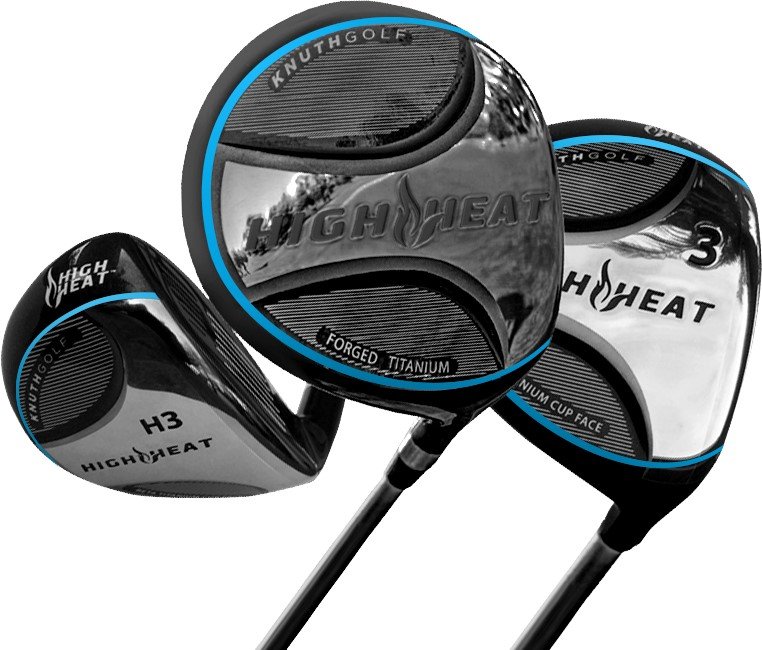
This new version of the High Heat Driver has been redesigned so the "sweet spot" covers virtually the entire face. Knuth managed this by taking advantage of some new USGA changes to the "CT" Rule -- for us normal folks, that's the rule that regulates the trampoline effect. The short version is that the new design produces a 1.41 smash factor all over the face, which translates to around an extra 20 yards.
The article goes into considerable detail if you're interested . There will also be fairway woods and hybrids, and they're all supposed to be available in April. The driver will apparently cost around $500, the fairway woods $450 and the hybrids $260-ish..
This new version of the High Heat Driver has been redesigned so the "sweet spot" covers virtually the entire face. Knuth managed this by taking advantage of some new USGA changes to the "CT" Rule -- for us normal folks, that's the rule that regulates the trampoline effect. The short version is that the new design produces a 1.41 smash factor all over the face, which translates to around an extra 20 yards.
The article goes into considerable detail if you're interested . There will also be fairway woods and hybrids, and they're all supposed to be available in April. The driver will apparently cost around $500, the fairway woods $450 and the hybrids $260-ish..
Tuesday, February 6, 2018
The Complete Golf Digest Hot List
Sorry this is late. I'm having internet problems.
Just a link today. I noticed that a lot of you checked out the Driver Hot List that I linked to the other day. Since Golf Digest has now posted the entire Hot List, I thought I'd give you a link to that as well.
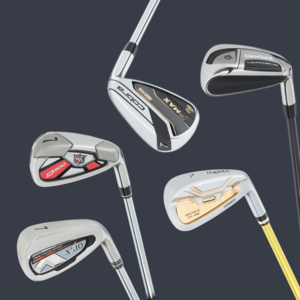
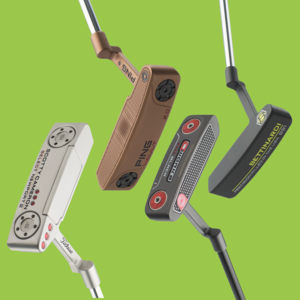
Betwwen all the club and ball listings, this should keep you club geeks busy for a while. ;-)
Just a link today. I noticed that a lot of you checked out the Driver Hot List that I linked to the other day. Since Golf Digest has now posted the entire Hot List, I thought I'd give you a link to that as well.
Betwwen all the club and ball listings, this should keep you club geeks busy for a while. ;-)
Friday, February 2, 2018
Golf Digest's 2018 Driver Hot List
Now that the PGA Merchandise Show is over, Golf Digest has posted their annual Hot List of new drivers. The biggest takeaway I got from the review video (which is on every individual driver's spec page) is that you probably need to be fitted using a launch monitor because the new drivers are so varied.
Here's an extra tidbit: Mike Stachura says in the video that, if your driver is a few years old, it's probably six yards shorter than the new drivers when you hit it ON THE SWEET SPOT, and perhaps eleven yards less on an off-center hit.
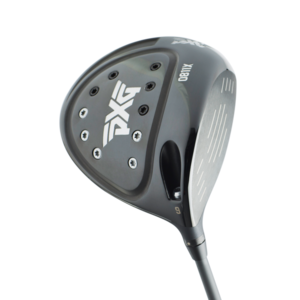
And in case you wonder why I chose to show you the PXG 0811X driver -- especially when it only got a silver rating and not a gold rating -- the reason is simple: At $850US, if you're like me, this is probably the closest to it that you're going to get. But it's pretty, don't you think?
Here's an extra tidbit: Mike Stachura says in the video that, if your driver is a few years old, it's probably six yards shorter than the new drivers when you hit it ON THE SWEET SPOT, and perhaps eleven yards less on an off-center hit.
And in case you wonder why I chose to show you the PXG 0811X driver -- especially when it only got a silver rating and not a gold rating -- the reason is simple: At $850US, if you're like me, this is probably the closest to it that you're going to get. But it's pretty, don't you think?
Thursday, January 25, 2018
Charlie Rymer Explains Callaway's Jailbreak Tech (Video)
With all the golf this week, I didn't want to write a long post. But this short video caught my eye, mainly because the Jailbreak technology fascinates me and this is the first time I've seen an actual cutaway look at the inside of the new Rogue driver.
For some reason I had imagined the bars would look a bit different than they do. But I have to admit, seeing them really helped me get a better handle on what they do.
This video won't take you away from the golf broadcasts for much more than a minute, but it does a really good job explaining how Jailbreak works.
For some reason I had imagined the bars would look a bit different than they do. But I have to admit, seeing them really helped me get a better handle on what they do.
This video won't take you away from the golf broadcasts for much more than a minute, but it does a really good job explaining how Jailbreak works.
Tuesday, January 9, 2018
The Golf Ball Debates Resume
Dustin Johnson's 432-yard "almost a hole-in-one on a par-4" drive at Kapalua's 12th hole Sunday has started the new round of debates over the modern golf ball and how far it flies. GC posted this piece by Randall Mell on Monday that sums up some of the issues.
I must admit that at times I find this all a bit humorous. The history of golf is filled with players who seemed to be ungodly long with a driver, regardless of the ball they used.
For example, in an article in The American Golfer (dated 7 May 1921) O.B. Keeler wrote:
Even more interesting is an article Keeler wrote in the same magazine later that year, in the 17 December 1921 issue, the tenth in a series called Why These Fads and Fancies? titled simply Ballistics. Here is a short section of that article, which began on page 13 and continued on page 30:
And in the modern day? A 2013 Golf Magazine article said there were 20 holes over 600 yards on the PGA Tour and included pictures of the ten longest, the longest being the 667-yard first hole at Firestone.
So, despite all the advances in golf ball design, club design, course architecture, agronomy and player size -- that last is rarely mentioned as a significant change, although I would expect 6'4" DJ to hit the ball a bit longer than most players who weren't that tall! -- despite all that, the longest hole on Tour was still only 60-some yards longer than in 1921. (Please note that, while there are longer holes in the world, they aren't par-5s.)
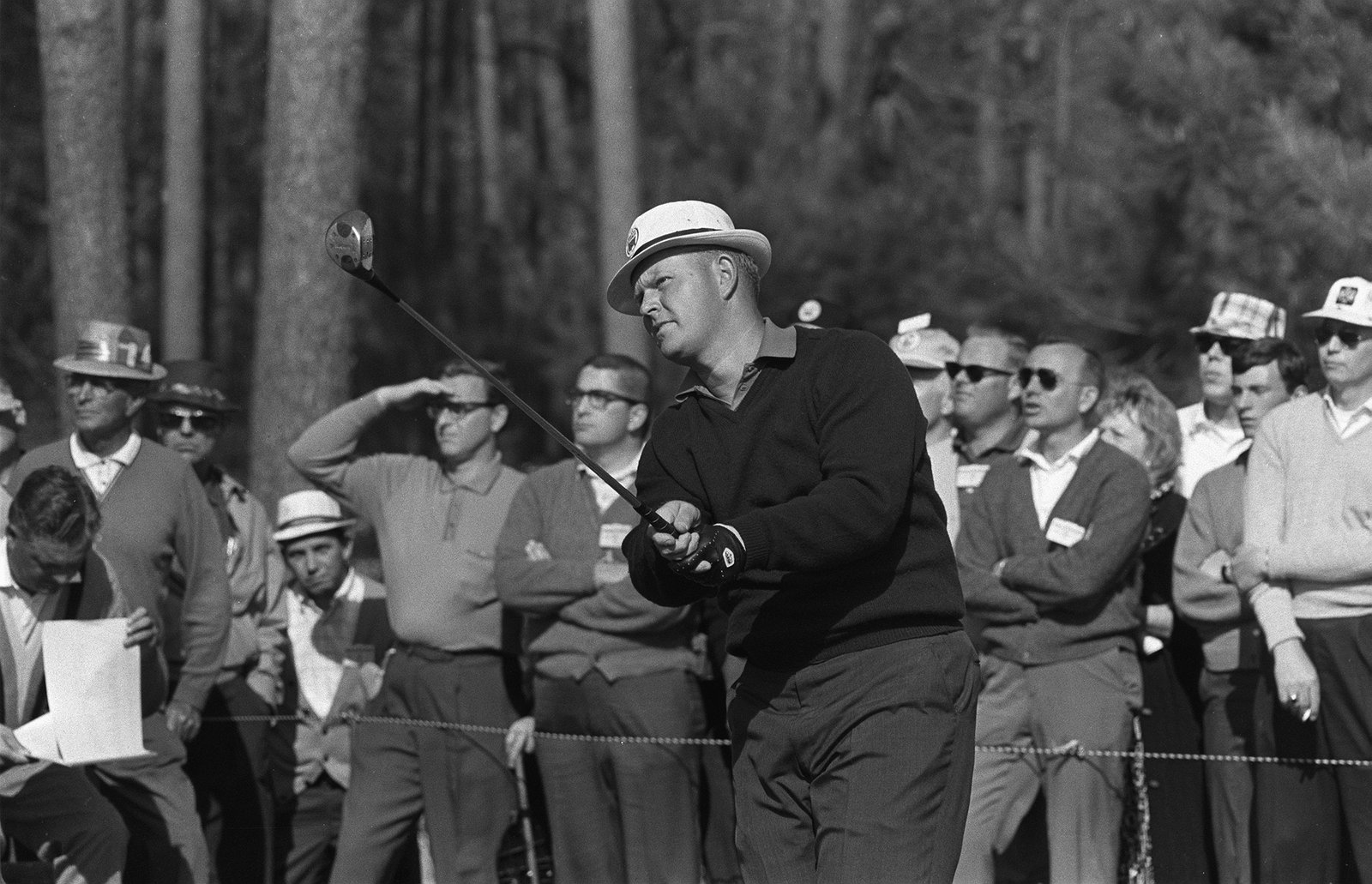
And other players besides Jones have been long hitters despite using "inferior" equipment. Jack Nicklaus -- the above photo comes from 1966 -- won the 1963 PGA Championship at the Dallas Athletic Club by two shots. In the long drive competition held on Wednesday that week, Jack won with a 341-yard drive. Like Jones, Jack used a balata ball and persimmon-headed driver, albeit with a steel shaft. (I found that info in both this USA Today article -- where I got the photo above -- and Wikipedia's article on the 1963 PGA.)
Don't misunderstand me. I'm not arguing either for or against how far the ball travels. Personally I'd like to see something done to keep the older courses in play. Longtime readers of this blog may remember a 2009 post called Why Not a Par 67 Course? where I suggested the (apparently) blasphemous idea that par is a relatively meaningless concept and we could set it at any number we chose. These days I don't think that would make any difference, simply because Tour events have become so large that those courses don't have enough room for all the tents and parking and such.
I'll leave those debates to the analysts and officials who get paid to debate such things.
I suspect the powers-that-be will have to put a lid on development eventually -- longer courses are simply becoming economically and ecologically unfeasible these days. But it seems to me that, when you consider just the basic issue of distance, the golf ball debate hasn't changed much in at least a century. The pros have always been cited as "proof" that the ball flies too far, while the average amateur can't even drive the ball 200 yards consistently.
Perhaps this says less about the equipment and more about our inability to make a simple swinging motion with a club.
But whatever else it means, I guess we can look forward to an increased battle over golf ball standards this year. And that's about par for the course.
I must admit that at times I find this all a bit humorous. The history of golf is filled with players who seemed to be ungodly long with a driver, regardless of the ball they used.
For example, in an article in The American Golfer (dated 7 May 1921) O.B. Keeler wrote:
BOB JONES is an extremely long hitter. He has been a long hitter since he was thirteen years old. At Merion, in the national championship of 1916, Bob being then fourteen, he drove some of the longest tee-shots in that tournament, and, incidentally, traveled thirty holes against Frank Dyer in a matter of four strokes under 4's, if my memory is not at fault—the best stretch of golf shot in that tournament. He hit one or two tee-shots of better than three hundred yards. [p7]Hmmm... a 14-year-old Bobby Jones could hit one of those old Haskell rubber balls -- essentially a balata ball -- over 300 yards with a persimmon-headed, hickory-shafted driver that would have been about two inches or so shorter than the current standard. And Jones was only around 5'10", about Rory McIlroy's height. Interesting.
Even more interesting is an article Keeler wrote in the same magazine later that year, in the 17 December 1921 issue, the tenth in a series called Why These Fads and Fancies? titled simply Ballistics. Here is a short section of that article, which began on page 13 and continued on page 30:
Recently we have got the golf ball in our power in at least one direction—we have the wretched thing standardized. That is, it must not weigh more than a certain weight (1.62 ounce); and it must not be smaller than a certain diameter, which I think is that same amount in inches; while it can be as much lighter or as much larger as desired—which doesn't appear to be much.Bear in mind, this was written in 1921. It laments the (at that time) extreme distances which the ball traveled -- note that a 600-yard hole was considered "the approximate limit" at that time, although there weren't many of them. Note that Keeler says that others before him have lamented that the situation would be even worse!
It seems we were tending toward a pellet about the size of an old-fashioned quinine pill, with a soupcon of radium in it, or something to give it a range that would result in the scrapping of all our standard golf courses and making them over on the Great Plains of the Middle West or the Desert of Sahara, or somewhere where there was more room.
The Royal and Ancients and other golf arbiters decided something ought to be done about it—steps should be taken, resolutions adopted; measures taken, or something. It turned out to be measures; weights and measures, you might say. And now we have the standardized golf ball, with no especial sacrifice of power, velocity or range, if the advertisements may be credited.
As a matter of fact, they stopped the revision of the ball downward right about where it was; I think that a few brands were a shade smaller and a shade heavier than the present standard; but I do not recall a season with more punishment administered to long-hitting records than the past one.
So the golf courses are saved, it seems; and we moderate players won't have to battle our way with a drive and five screaming brassies to get in range of the eight hundred and nine hundred and thousand-yard holes, predicted not so long ago by the more excitable pessimists as the logical outgrowth of the smaller and heavier and higher-powered projectiles turned out year by year.
Six hundred yards will, for the nonce, remain the approximate limit — that is to say, a drive and two screaming brassies for the gentler players to get in pitching distance; for it generally is agreed that a brassie shot should not be expected to scream unless it travels more than one hundred and fifty yards.
And in the modern day? A 2013 Golf Magazine article said there were 20 holes over 600 yards on the PGA Tour and included pictures of the ten longest, the longest being the 667-yard first hole at Firestone.
So, despite all the advances in golf ball design, club design, course architecture, agronomy and player size -- that last is rarely mentioned as a significant change, although I would expect 6'4" DJ to hit the ball a bit longer than most players who weren't that tall! -- despite all that, the longest hole on Tour was still only 60-some yards longer than in 1921. (Please note that, while there are longer holes in the world, they aren't par-5s.)
And other players besides Jones have been long hitters despite using "inferior" equipment. Jack Nicklaus -- the above photo comes from 1966 -- won the 1963 PGA Championship at the Dallas Athletic Club by two shots. In the long drive competition held on Wednesday that week, Jack won with a 341-yard drive. Like Jones, Jack used a balata ball and persimmon-headed driver, albeit with a steel shaft. (I found that info in both this USA Today article -- where I got the photo above -- and Wikipedia's article on the 1963 PGA.)
Don't misunderstand me. I'm not arguing either for or against how far the ball travels. Personally I'd like to see something done to keep the older courses in play. Longtime readers of this blog may remember a 2009 post called Why Not a Par 67 Course? where I suggested the (apparently) blasphemous idea that par is a relatively meaningless concept and we could set it at any number we chose. These days I don't think that would make any difference, simply because Tour events have become so large that those courses don't have enough room for all the tents and parking and such.
I'll leave those debates to the analysts and officials who get paid to debate such things.
I suspect the powers-that-be will have to put a lid on development eventually -- longer courses are simply becoming economically and ecologically unfeasible these days. But it seems to me that, when you consider just the basic issue of distance, the golf ball debate hasn't changed much in at least a century. The pros have always been cited as "proof" that the ball flies too far, while the average amateur can't even drive the ball 200 yards consistently.
Perhaps this says less about the equipment and more about our inability to make a simple swinging motion with a club.
But whatever else it means, I guess we can look forward to an increased battle over golf ball standards this year. And that's about par for the course.
Saturday, November 25, 2017
How Might Newer Equipment Help Tiger... and You?
Here's a Golf Digest article that might help you improve your driving -- and might help Tiger as well!
It's no secret that Tiger never really considered updating his equipment until after his back injuries. So this article looks at some of Tiger's driving stats and what kind of equipment changes might help him as he gets his game (and body) back in shape.

The article is pretty technical without being difficult to understand, covering what sorts of equipment changes are available to Tiger -- and to the average golfer as well. What's really cool is how small changes in equipment can make huge differences in distance, even when you don't gain any clubhead speed!
Yeah, this is info that I think you'll all find very useful. And if Tiger is making any of these changes, he may surprise everybody when he starts playing again.
It's no secret that Tiger never really considered updating his equipment until after his back injuries. So this article looks at some of Tiger's driving stats and what kind of equipment changes might help him as he gets his game (and body) back in shape.
The article is pretty technical without being difficult to understand, covering what sorts of equipment changes are available to Tiger -- and to the average golfer as well. What's really cool is how small changes in equipment can make huge differences in distance, even when you don't gain any clubhead speed!
Yeah, this is info that I think you'll all find very useful. And if Tiger is making any of these changes, he may surprise everybody when he starts playing again.
Tuesday, November 21, 2017
Five Specialty Metalwoods
This short Golf Digest article is nearly a month old but with Christmas coming, now is when you might need it! The article targets five new metalwoods that are tailored for specific problems various golfers face. The prices run from $200-$700.

The five clubs are:
The least expensive option, the Cobra, is also the only one listed as "full service for the flaws of average golfers." Unless one of the other clubs directly targets your main problem, this might be the first one you'll want to investigate.
It would probably be an easier sell to your potential Santa Claus as well, if you know what I mean.;-)
The five clubs are:
- Tour Edge Exotics CBX, $350
- Callaway GBB Epic Star, $700
- Cobra F-MAX, $200
- Titleist 818 H1, $280
- Ping G400 SF TEC, $270
The least expensive option, the Cobra, is also the only one listed as "full service for the flaws of average golfers." Unless one of the other clubs directly targets your main problem, this might be the first one you'll want to investigate.
It would probably be an easier sell to your potential Santa Claus as well, if you know what I mean.;-)
Thursday, October 19, 2017
So What's in YOUR Golf Bag?
Golf Digest, as usual, posted an article outlining what equipment the past week's PGA Tour winner was carrying. This week's article concerned CIMB winner Pat Perez, and the list piqued my interest.

You'll probably enjoy the short article simply because PXG founder Bob Parsons tells how he and Pat got hooked up. But it was the equipment list itself that really made me stop and think.
Pat has only been back from shoulder surgery for around a year. He has changed every club in his bag, except for his driver. Yet, unlike other players who make equipment changes, this complete overhaul doesn't seem to have hurt his game one little bit!
Given that Lydia Ko also changed to PXG but seems to have struggled to adapt, much as Rory did when he changed to Nike back in 2013 and as other players who change clubs seem to do, I have to wonder if Pat simply approaches his equipment with a different attitude from other players.
Perhaps he doesn't experiment as much with his clubs; perhaps he doesn't make drastic changes, in hopes of finding some new weapon; perhaps he simply sticks with what he knows has worked for him in the past. I don't know.
What I do know is that Pat has a pretty traditional setup -- two woods, one hybrid, seven irons, three wedges and a putter -- and he's pretty successful with it. Next time you go shopping for clubs, perhaps you should avoid dramatic changes to your current setup unless you know your game has changed enough to make the change worthwhile.
It's worth thinking about.
You'll probably enjoy the short article simply because PXG founder Bob Parsons tells how he and Pat got hooked up. But it was the equipment list itself that really made me stop and think.
- Ball: Titleist Pro V1
- Driver: TaylorMade M2 2017 (Mitsubishi Tensei Pro White 70 TX), 9.5 degrees
- 3-wood: PXG 0317, 15 degrees
- Hybrid: PXG 0317X, 19 degrees
- Irons (3-4): PXG 0311XF; (5-PW): PXG 0311
- Wedges: PXG 0311T (52, 60 degrees)
- Putter: PXG Gunboat (a mallet putter, described in detail in the article)
Pat has only been back from shoulder surgery for around a year. He has changed every club in his bag, except for his driver. Yet, unlike other players who make equipment changes, this complete overhaul doesn't seem to have hurt his game one little bit!
Given that Lydia Ko also changed to PXG but seems to have struggled to adapt, much as Rory did when he changed to Nike back in 2013 and as other players who change clubs seem to do, I have to wonder if Pat simply approaches his equipment with a different attitude from other players.
Perhaps he doesn't experiment as much with his clubs; perhaps he doesn't make drastic changes, in hopes of finding some new weapon; perhaps he simply sticks with what he knows has worked for him in the past. I don't know.
What I do know is that Pat has a pretty traditional setup -- two woods, one hybrid, seven irons, three wedges and a putter -- and he's pretty successful with it. Next time you go shopping for clubs, perhaps you should avoid dramatic changes to your current setup unless you know your game has changed enough to make the change worthwhile.
It's worth thinking about.
Friday, September 8, 2017
A Build-Your-Own Weighted Swing Stick (Video)
Another Golf Digest project video -- this time, a swing training aid from household items.
This is self-explanatory -- fill a tube with sand and seal the end with duct tape. (PLEASE NOTE: The broomstick they used is a hollow metal one.)
To be honest, I think this would be easier to make if you just bought some 3/4" PVC pipe and used screw-on or glue-on fittings at the ends. (You could still use duct tape to save money, if you want to.) While you might not have those things just laying around the house, many of you probably don't have a hollow metal broomstick laying around either.
While I don't care for expensive swing aids, something inexpensive like this can be useful if you have a need for it. And I like the idea that you can make this swing stick as heavy as you want (if you use a mixture of sand and ball bearings, for instance).
Of course, you could also just swing two golf clubs at once. Each to his own.
This is self-explanatory -- fill a tube with sand and seal the end with duct tape. (PLEASE NOTE: The broomstick they used is a hollow metal one.)
To be honest, I think this would be easier to make if you just bought some 3/4" PVC pipe and used screw-on or glue-on fittings at the ends. (You could still use duct tape to save money, if you want to.) While you might not have those things just laying around the house, many of you probably don't have a hollow metal broomstick laying around either.
While I don't care for expensive swing aids, something inexpensive like this can be useful if you have a need for it. And I like the idea that you can make this swing stick as heavy as you want (if you use a mixture of sand and ball bearings, for instance).
Of course, you could also just swing two golf clubs at once. Each to his own.
Thursday, August 10, 2017
Make Your Own Headcover (Video)
Yes, a few days back I posted a Golf Digest video on how to make a weekend golf bag from a pair of jeans (or other material, for that matter). So I HAVE to post the companion video on how to turn a teddy bear into a headcover. (They used a panda, so I'm figuring you can use almost any stuffed animal. Cool!)
It looks simple enough for even someone like me. Although I hope the stuffed animals don't really squeal like that when you cut their bottoms. Perhaps pandas are just too wimpy to protect golf clubs.
Anyway, if you're like me, you probably don't want a head cover that looks like everybody else's, so this video is tailormade for you. I'm thinking Stitch (from the Disney movie) might be perfect for my driver. Let your imagination go wild!
It looks simple enough for even someone like me. Although I hope the stuffed animals don't really squeal like that when you cut their bottoms. Perhaps pandas are just too wimpy to protect golf clubs.
Anyway, if you're like me, you probably don't want a head cover that looks like everybody else's, so this video is tailormade for you. I'm thinking Stitch (from the Disney movie) might be perfect for my driver. Let your imagination go wild!
Sunday, August 6, 2017
A Weekend Golf Bag from a Pair of Jeans?!? (Video)
I've never posted something like this, but I saw it and was blown away. Golf Digest posted a video on how to make a weekend golf bag from a pair of jeans! How cool is that?
The video is pretty much self-explanatory. And I think the coolest thing is that you don't have to use a pair of jeans -- you can use any type of material you like. Just go to a hobby or piece goods store -- any place that sells material by the yard -- and buy one yard. (How do I know? My mom used to sew. It's called "buying it off the bolt." You'll likely get a piece that's 36 inches long and about 45 inches wide. That should be plenty.)
If you've read this blog for a while, you know I'm all for playing weekend rounds with a half set of clubs to improve your creativity on the course. A weekend bag is perfect for this, especially if your course lets you walk.
The video is pretty much self-explanatory. And I think the coolest thing is that you don't have to use a pair of jeans -- you can use any type of material you like. Just go to a hobby or piece goods store -- any place that sells material by the yard -- and buy one yard. (How do I know? My mom used to sew. It's called "buying it off the bolt." You'll likely get a piece that's 36 inches long and about 45 inches wide. That should be plenty.)
If you've read this blog for a while, you know I'm all for playing weekend rounds with a half set of clubs to improve your creativity on the course. A weekend bag is perfect for this, especially if your course lets you walk.
Sunday, July 30, 2017
Just How Much Performance Data Is Enough?
Golf Digest has put up a fairly lengthy article called Big Data: Info Seekers that I thought some of you might be interested in. It takes a detailed look at how three players -- Zach Johnson, Bryson DeChambeau and Kevin Streelman -- collect and use "big data" to improve their games.
If you Google "what is big data" you'll get this definition: "extremely large data sets that may be analyzed computationally to reveal patterns, trends, and associations, especially relating to human behavior and interactions." But I think this additional bit from the Wikipedia article on big data adds an important fact:
Some golfers -- and not just golfers, but other athletes as well -- are looking for something, anything, that will give them a competitive edge against the field. For example, according to the article, Zach is analyzing 600+ performance stats from ShotLink. Bryson is measuring how many millimeters his shaft flexes during his downswing. And Kevin is using a special launch monitor when he putts.
That's right... when he putts.
I'm linking you guys to this article because I know many of you want to copy the techniques of the pros. But you also need to ask yourself... just how much is too much? We can organize tens of thousands of data points if we desire, but does that mean we need to use them all? Is there some point at which all this analysis becomes counterproductive and actually hurts our games?
Those are questions you'll have to answer for yourselves. But this article is a good overview of the kinds of things that the pros are teasing from the multitude of stats that are now available to them. You need to know what's being done before you can decide if you want to pursue the same approach...
Or whether such analysis will simply paralyze you with info that's beyond your ability to use.
If you Google "what is big data" you'll get this definition: "extremely large data sets that may be analyzed computationally to reveal patterns, trends, and associations, especially relating to human behavior and interactions." But I think this additional bit from the Wikipedia article on big data adds an important fact:
Big data is a term for data sets that are so large or complex that traditional data processing application software is inadequate to deal with them. Big data challenges include capturing data, data storage, data analysis, search, sharing, transfer, visualization, querying, updating and information privacy.That second paragraph better sums up what golfers are looking for when they turn to big data. They're looking for trends and patterns that may not be readily apparent just from looking at the data itself, simply because there's too much for one person to grasp easily.
Lately, the term "big data" tends to refer to the use of predictive analytics, user behavior analytics, or certain other advanced data analytics methods that extract value from data, and seldom to a particular size of data set...
Some golfers -- and not just golfers, but other athletes as well -- are looking for something, anything, that will give them a competitive edge against the field. For example, according to the article, Zach is analyzing 600+ performance stats from ShotLink. Bryson is measuring how many millimeters his shaft flexes during his downswing. And Kevin is using a special launch monitor when he putts.
That's right... when he putts.
I'm linking you guys to this article because I know many of you want to copy the techniques of the pros. But you also need to ask yourself... just how much is too much? We can organize tens of thousands of data points if we desire, but does that mean we need to use them all? Is there some point at which all this analysis becomes counterproductive and actually hurts our games?
Those are questions you'll have to answer for yourselves. But this article is a good overview of the kinds of things that the pros are teasing from the multitude of stats that are now available to them. You need to know what's being done before you can decide if you want to pursue the same approach...
Or whether such analysis will simply paralyze you with info that's beyond your ability to use.
Friday, June 30, 2017
A Build-Your-Own Driving Range? Maybe...
This Golf Digest article is so interesting that I had to call it to your attention. It's about the basics of building your own indoor driving range.
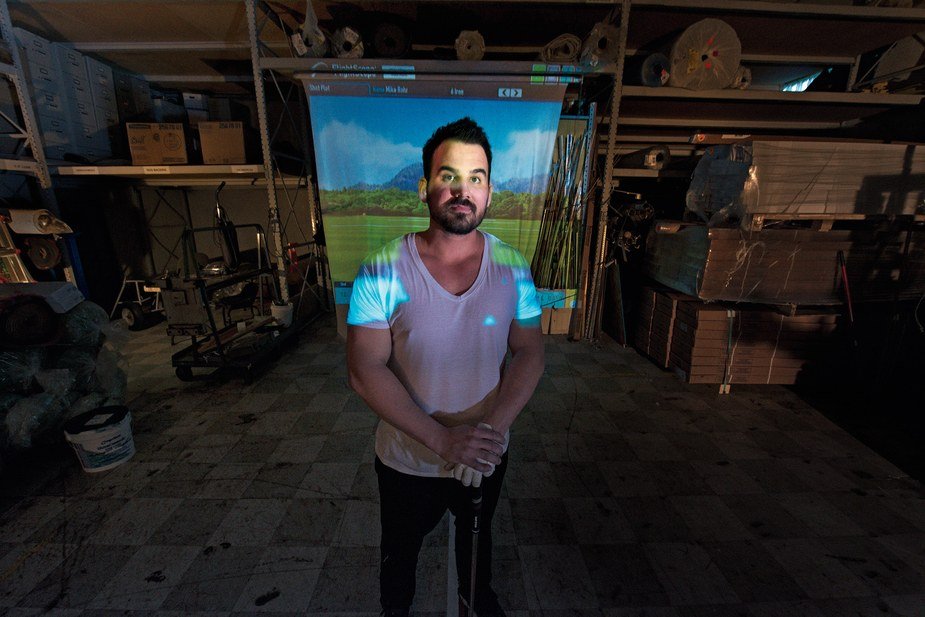
Yes, you heard me right. And the price may not be as bad as you think. The article details how two different folks tackled the project, each approaching it from opposite ends of the economic spectrum:
Look, I know most of you won't try this. But it will let you see just how much the price of the technology has come down, and introduce you to the variety of available options that are responsible for that price drop.
At this rate, it might not be too long before building your own indoor driving range is no more expensive -- or complicated -- than buying and installing a really nice computer system...
And maybe replacing a window now and then. You know, when you hit that indoor hosel rocket that you won't admit you hit. ;-)
Yes, you heard me right. And the price may not be as bad as you think. The article details how two different folks tackled the project, each approaching it from opposite ends of the economic spectrum:
Depending on the level of technology you want, a complete build-out with turf, netting, screen, computer, software and projector will run you $3,000 at the low end and upward of $50,000 if you check all the option boxes.This article is much more detailed than I expected when I began reading it. There are even some tips on how to improve the rig's performance.
Look, I know most of you won't try this. But it will let you see just how much the price of the technology has come down, and introduce you to the variety of available options that are responsible for that price drop.
At this rate, it might not be too long before building your own indoor driving range is no more expensive -- or complicated -- than buying and installing a really nice computer system...
And maybe replacing a window now and then. You know, when you hit that indoor hosel rocket that you won't admit you hit. ;-)
Sunday, May 28, 2017
Callaway Puts Jailbreak in Some New Irons
I saw this article at the Golf Digest site earlier this week, but I'm just now posting a link to it. It's not because I expect many of you want to buy a set -- at $2000 for eight steel-shafted irons, it's a hefty price -- but because I suspect we'll be seeing this sort of tech trickle down to lower-priced irons before long.
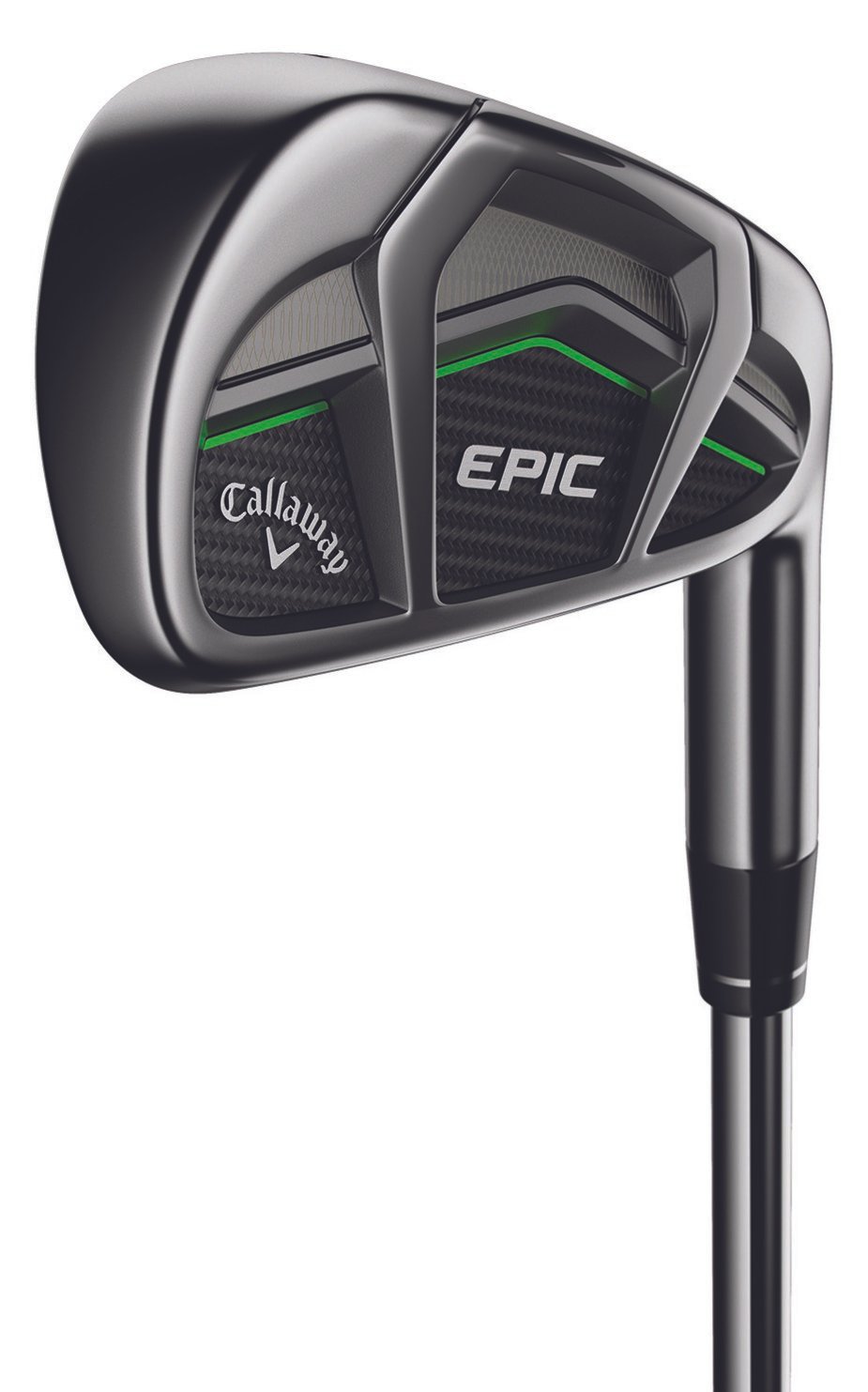
The tech in the new Callaway Epic irons is way too complex for someone like me to explain, but this article does a pretty good job of "dumbing it down" for us laymen. It's not just a matter of incorporating the Jailbreak technology, which stiffened the framework around more flexible driver faces. There is a new cup shape around the iron face, new metal mixtures to redistribute weight removed from the traditional heavy areas, and a new design concept to shape how these innovations are combined.
As I said, I don't know that many of you will be rushing out to lay down hard cash for the irons or the new Epic hybrids, which are also described in the article. But at the very least, you know that Callaway will find ways to incorporate this tech into their less-expensive irons. It's hard to believe that the other manufacturers won't start developing their own versions if the Epic line is as successful as Callaway hopes.
We might as well get a leg up on the tech now, before it gets too complex to grasp.
The tech in the new Callaway Epic irons is way too complex for someone like me to explain, but this article does a pretty good job of "dumbing it down" for us laymen. It's not just a matter of incorporating the Jailbreak technology, which stiffened the framework around more flexible driver faces. There is a new cup shape around the iron face, new metal mixtures to redistribute weight removed from the traditional heavy areas, and a new design concept to shape how these innovations are combined.
As I said, I don't know that many of you will be rushing out to lay down hard cash for the irons or the new Epic hybrids, which are also described in the article. But at the very least, you know that Callaway will find ways to incorporate this tech into their less-expensive irons. It's hard to believe that the other manufacturers won't start developing their own versions if the Epic line is as successful as Callaway hopes.
We might as well get a leg up on the tech now, before it gets too complex to grasp.
Sunday, May 21, 2017
Some New Casual Golf Shoes
Back in March I did a post about new golf shoes for 2017. Now Ashley Mayo has a new article over at the Golf Digest site called 7 Golf Shoes You Can Easily Wear Off the Course.
The main problem I have with this article is the price of the shoes. (Of course, that's becoming a common problem with golf shoes. But I digress...) There's only one shoe in her list that's under $100, and that's the FootJoy GreenJoys for $70, shown below.
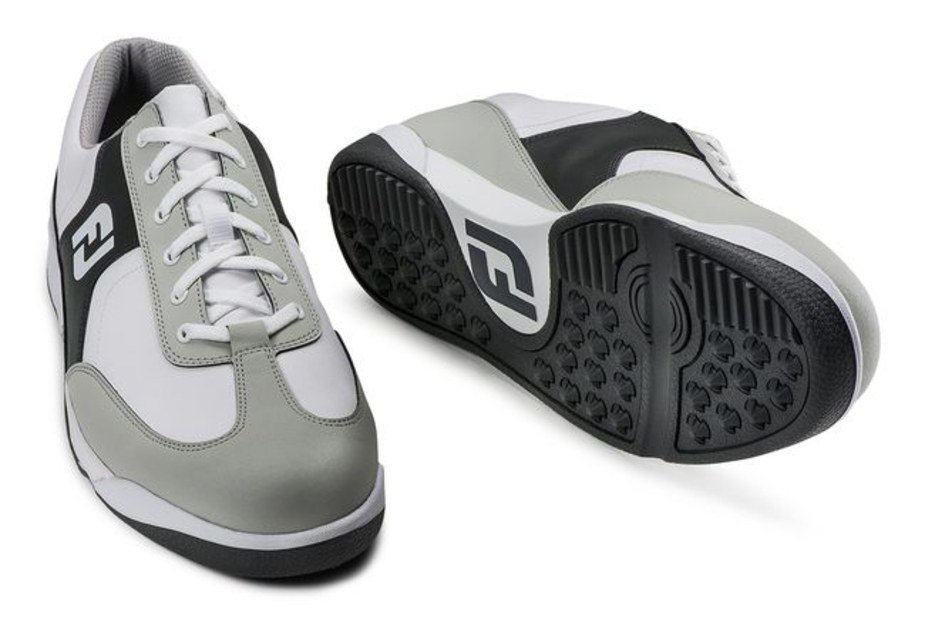
My original post included FootJoy Contour Casuals for $100, and both FootJoy models appear to have similar soles. In either case, FootJoy seems to be the company to check for less expensive sneaker styles. (My original post included a $90 pair from Biion but those looked more like traditional golf shoes, albeit very light.)
My personal fave from the new list is the Adidas Golf Adicross Primeknit. They retail for $115 and remind me of boat slippers.
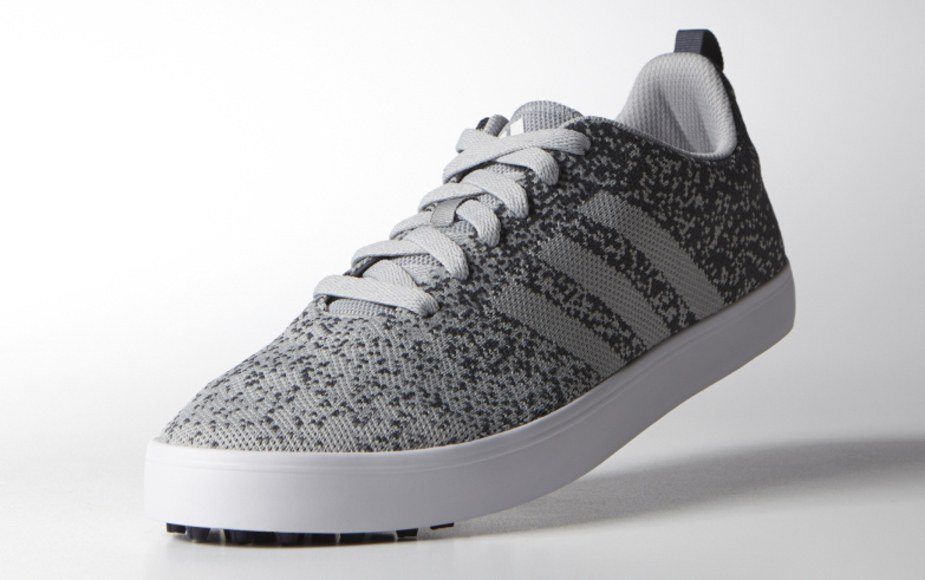
These appear to have some kind of cloth or synthetic knit upper rather than leather; the description says they're breathable. In any case, they have a simple stylishness that appeals to me.
The list has a fairly wide variety of styles, considering it only contains seven models. Still, it's a quick intro to the types of choices you have if you're looking for golf shoes you can wear when you're in a hurry to leave the course for the 19th hole.
The main problem I have with this article is the price of the shoes. (Of course, that's becoming a common problem with golf shoes. But I digress...) There's only one shoe in her list that's under $100, and that's the FootJoy GreenJoys for $70, shown below.
My original post included FootJoy Contour Casuals for $100, and both FootJoy models appear to have similar soles. In either case, FootJoy seems to be the company to check for less expensive sneaker styles. (My original post included a $90 pair from Biion but those looked more like traditional golf shoes, albeit very light.)
My personal fave from the new list is the Adidas Golf Adicross Primeknit. They retail for $115 and remind me of boat slippers.
These appear to have some kind of cloth or synthetic knit upper rather than leather; the description says they're breathable. In any case, they have a simple stylishness that appeals to me.
The list has a fairly wide variety of styles, considering it only contains seven models. Still, it's a quick intro to the types of choices you have if you're looking for golf shoes you can wear when you're in a hurry to leave the course for the 19th hole.
Sunday, May 14, 2017
Matt Adams's Tips for Buying Wedges (Video)
A few weeks back, Matt Adams did a Morning Drive segment on the basics of buying wedges. This may be elementary stuff to some of you, but wedge design confuses many golfers. Adams used some clear visuals to make the basics very plain in this video.
The basics are very simple. I'll summarize:
And if the concept of bounce confuses you, don't feel embarrassed. We all have to deal with it. I would have less trouble hitting from the sand earlier on if I had simply known how bounce worked.
The basics are very simple. I'll summarize:
- Bounce is the angle between the leading edge and sole of the wedge. (There's a very nice diagram, using an actual wedge, in the video.)
- If you have a steep angle of attack on the ball -- that is, you're a "digger" -- you need more bounce.
- If you have a shallow angle of attack on the ball -- that is, you're a "picker" -- you need less bounce.
- If you play where the ground is very soft, you need more bounce.
- If you play where the ground is very hard, you need less bounce.
And if the concept of bounce confuses you, don't feel embarrassed. We all have to deal with it. I would have less trouble hitting from the sand earlier on if I had simply known how bounce worked.
Subscribe to:
Posts (Atom)