ATTENTION, READERS in the 28 EUROPEAN VAT COUNTRIES: Because of the new VAT law, you probably can't order books direct from my site now. But that's okay -- just go to my Smashwords author page.
You can order PDFs (as well as all the other ebook formats) from there.
Showing posts with label olympics. Show all posts

Monday, August 22, 2016

The Limerick Summary: 2016 Olympic Women’s Golf

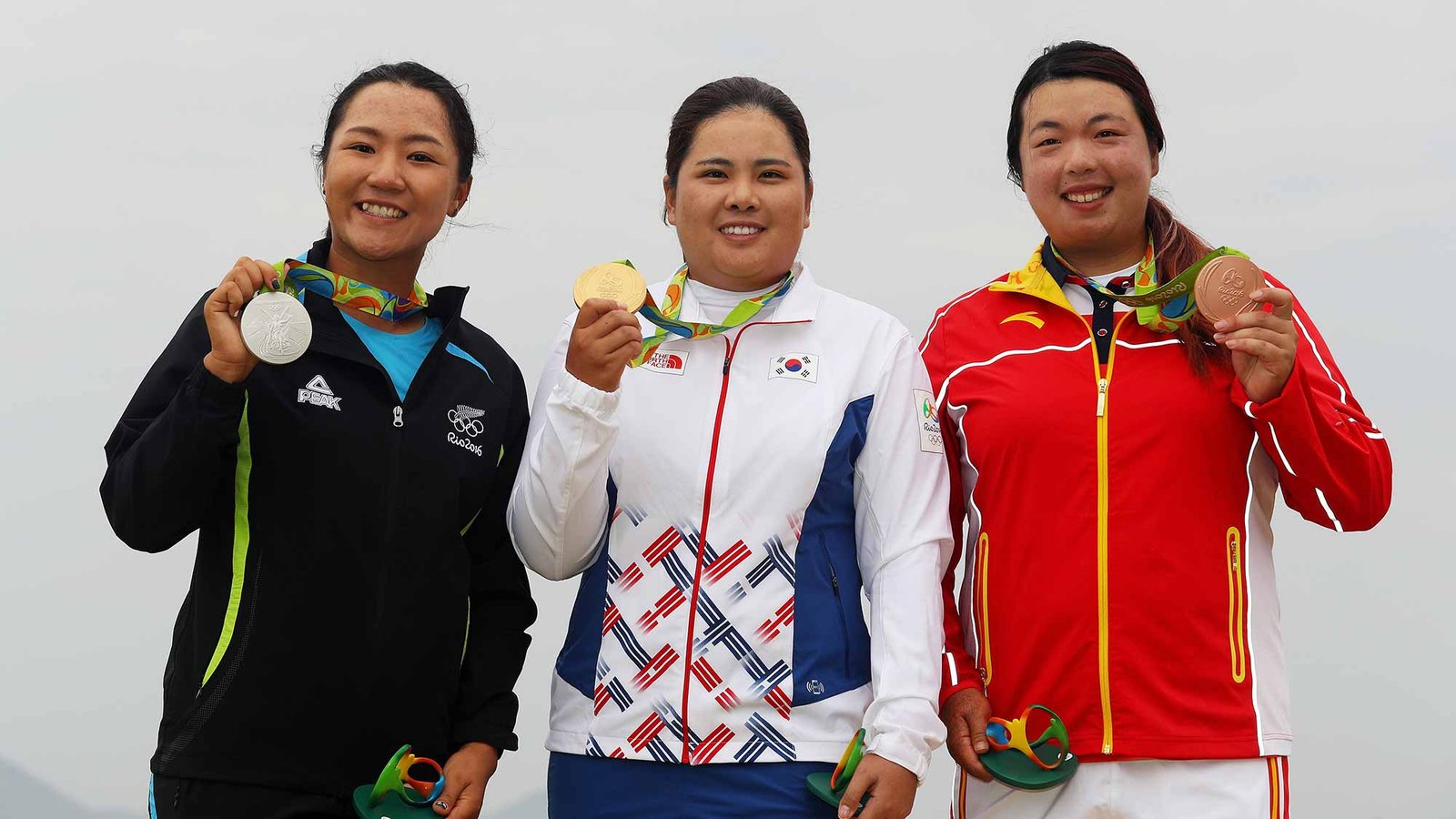
Medals: Inbee Park, Lydia Ko, Shanshan Feng

Around the wider world of golf: Si Woo Kim got his first PGA Tour win at the Wyndham Championship; Paul Peterson got his first ET win at the D+D REAL Czech Masters; Laura Gonzalez Escallon won the PHC Classic on the Symetra Tour; J.J. Spaun won the News Sentinel Open on the Web.com Tour; Brock Mackenzie won a seven-hole playoff to take the National Capital Open to Support Our Troops on the Mackenzie Tour - PGA TOUR Canada; Bo-Mee Lee won the CAT Ladies on the JLPGA (bangkokbobby has details); and Curtis Luck beat Brad Dalke 1up at the 116th US Amateur.

Lydia Ko, Inbee Park and Shanshan Feng

I don't know if there's much more to say than has already been said. Inbee Park proved the world -- yes, that includes me -- was wrong for not believing she could overcome biting criticism from her country's media, back problems, thumb injuries, and several weeks of over-par rounds, missed cuts and no competitive golf to crush her competition at the Olympics and take the gold medal.

She came in at (by her own estimate) around 80%, unable to hit the ball anywhere near as far as she usually does, uncertain of what to expect from round to round, and simply left the field eating her dust as she cruised to a 5-shot victory. How do you possibly put such a dominant performance into words?

In the end, all you can say is that Inbee Park beat them all with pure strength of will. If that's not the Olympic Spirit, I don't know what is.

The women came into this Olympics in much better form than the men, there's no arguing that. Let's cut the guys a bit of slack for being the first to face this unpredictable pressure, but the gals still staged a much closer battle at the end than the men.

Well, closer except for Inbee. She lapped the field, but you knew that.

I can't help but wonder how many of those little girls who were inspired by Olympic golf will end up copying the slow, upright swing that decimated a field of long hitters. After all, none of the winners' swings fit the mold of textbook swings. Inbee has her swing, silver medalist Lydia Ko uses David Leadbetter's A Swing, and bronze medalist Shanshan Feng has one of the simplest swings you'll ever see -- not terribly long, with no exaggerated hip or leg drive. They were the giant killers, and you have to think their swings will be the goal of the young wannabees.

In the meantime, the female Olympians get their own Limerick Summary. And it's certainly well-deserved!
Inbee Park made it clear with her score
That her thumb is an issue no more!
Once she snagged the gold medal,
Ko and Feng had to settle
For silver and bronze, nothing more.
The photo came from this page at LPGA.com.

Sunday, August 21, 2016

A Few Thoughts on Olympic Golf

I'll do an Olympic Limerick Summary tomorrow. Today I just want to share a few thoughts I had about golf's first time in the Olympics.

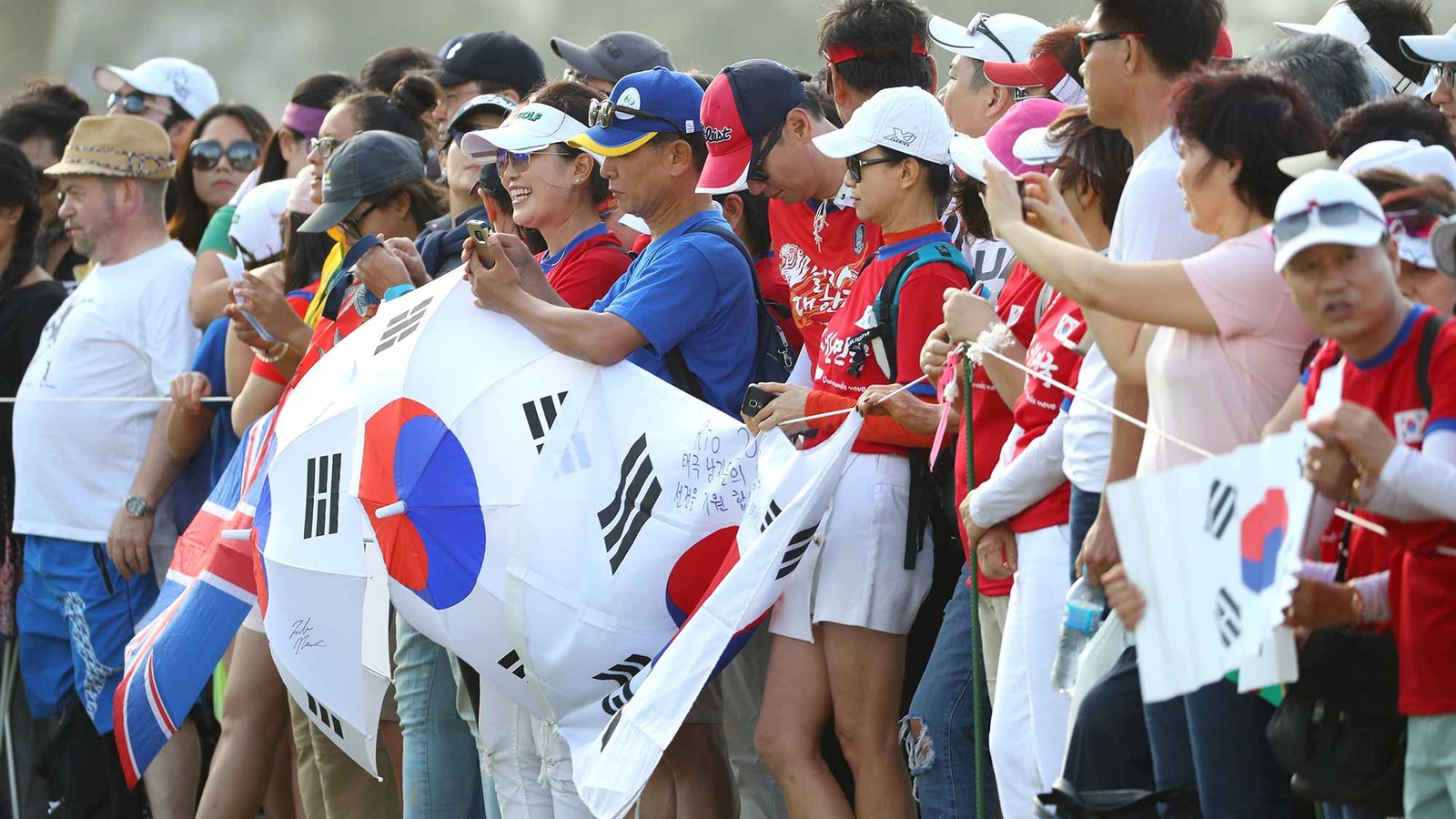
Korean fans at the golf venue

When the men's event finished, I wrote that I thought it probably came out better than it would have if the top male players had actually shown up. My reasoning was that the top-ranked players had been somewhat off their form leading up to the Olympics and, had they shown up, they wouldn't have played up to expectations anyway.

By comparison, having the top female players on hand definitely made their event better. The ladies were mostly playing on form, and the results seemed typical of a regular LPGA event. The normally streaky players were streaky, most of the normally consistent players were right there at the end of the final round, and we got a few surprises in the mix as well.

The course initially appeared easy -- wide fairways and big greens -- but it proved that Gil Hanse and Amy Alcott had thought things out thoroughly. The layout of the course allowed the fickle winds to challenge players without being overly penal, while forcing players to think their way around the course in good weather. As a whole, good shots were rewarded while bad shots were punished, and new fans got to see lots of exciting shots, including hole-in-ones. That makes for great TV as well.

And of course, Brazil will now have its first municpal course, and it's one done by a big name architect and a golf legend. Win, win, win all-around.

Overall, I thought both golf events played out very well. And the huge crowds that showed up for both events should have given the Olympic Committee enough reason to keep golf in the Olympics past 2020. Golf's ability to deliver big, even without all of its big guns in attendance, was a tour de force that I'm not sure many other sports could have managed.

We got a really good cross-section of performers. No country was able to dominate the event. Medals went to Great Britain, Sweden, the USA, South Korea, New Zealand and China. An Australian set the men's course record and a Russian set the women's course record. A young Indian made a name for herself, as did players (both male and female) from Belgium and Thailand. The players interacted with the crowds as they always do. And there was a clear camaraderie between the golfers and the other Olympic athletes, as evidenced on social media. Could things have gone better?

As for media coverage, I felt that NBC's ability to use Golf Channel for full round, every round coverage gave the golf events a clear advantage over many of the other sports. And using Terry Gannon -- who, in addition to being a knowledgeable golf commentator, would also be known to non-golf viewers from his career as a basketball player and his coverage of other sports -- as the point man for both events was, in my opinion, a stroke of genius. Gannon is comfortable with everybody from players like Annika to athletes-turned-celebrities like Tara Lipinski and Johnny Weir.

All-in-all, I think we have to declare this experiment a success. The future of Olympic golf could open some very interesting chapters going forward.

Thursday, August 18, 2016

Rickie and Patrick Came Back for This

Of course, I'm talking about the Wyndham Championship, the PGA Tour event happening this week in Greensboro NC -- which happens to be about 30 minutes from where I live.

Rickie Fowler

The Wyndham is important to most players primarily for one reason. It's the last regular event before the FedExCup Playoffs begin, so it's the last chance to make sure you're in the Top125, which means that your Tour card is locked up for another year and you get to play for roughly $16million bucks over the next month.

But Rickie and Patrick already have their cards and their spots in the Playoffs. For them, this is about getting Ryder Cup points. They don't have enough of those.

For Patrick, this is a homecoming of sorts. He got his first Tour win at Sedgefield Country Club back in 2013, and it launched him on a run up the OWGR and into the last Ryder Cup, where you might say he quieted his critics.

Patrick Reed shushes the Ryder Cup crowd

But for Rickie, Sedgefield is a new challenge that he'll need to learn quickly. He's currently 13th on the Ryder Cup points list... and that's just not good enough, unless you're willing to gamble on a Captain's pick. But with so many friends who have been trying to get him to come for years -- especially Captain Davis Love III -- he should have plenty of help learning the course.

Patrick holds the last qualifying spot at 8th, but he'd like a little more breathing room. And the fact that he can get it in Greensboro is just fine with him. As PGATOUR.com told it:
This time last year, Patrick Reed was back home in Texas watching Tiger Woods contend and Davis Love III win the Wyndham Championship on TV.
He had decided to skip the tournament that he won in 2013 to be fresh for the upcoming FedExCup Playoffs. Still, even though his reasoning was sound, Reed was torn.
“(It) was just killing me,” he recalled Wednesday.
So this year, despite a lead-up schedule that included The Olympics, making a return trip to Sedgefield was a no-brainer.
“I was like ‘It doesn’t matter,’” Reed recalled. “I’m coming and playing because this is like home to me, going and getting your first win with my wife on the bag.
“Awesome to be back.”
While it will be fun to see how Patrick and Rickie fare after their quick trip back from Rio, the real drama will be those fighting for their cards. Apparently all but four of the players ranked 120-150 in the FedExCup rankings are in Greensboro, ready to battle it out.

And I can tell you, folks, it WILL be a battle. We're having some serious heat -- high 90s and very muggy -- and lots of thunderstorms this week. These boys are looking at a real test of their endurance. Again, to quote Patrick from the article:
“From 2 to about 4:30 [Tuesday], we’re playing nine holes and it was the hottest I’ve ever seen it,” Reed said. “… Halfway through that nine holes, I was just like ‘Kessler [his caddie], what do we have? Kessler, get the yardage. Kessler, do you want to carry me now?"
Yes, it should be a lot of fun. (At least for us spectators.) And GC's coverage isn't scheduled to conflict with the gals at the Olympics, so we can get the best of both worlds.

I love Wyndham week! So does Patrick, and I bet Rickie will too.

Wednesday, August 17, 2016

Justin Rose's Wedge Tips

Since Justin won the gold medal just a few days back, this new instructional post at Golf Digest seems amazingly appropriate. Here are Justin Rose's keys to improving your wedge game.

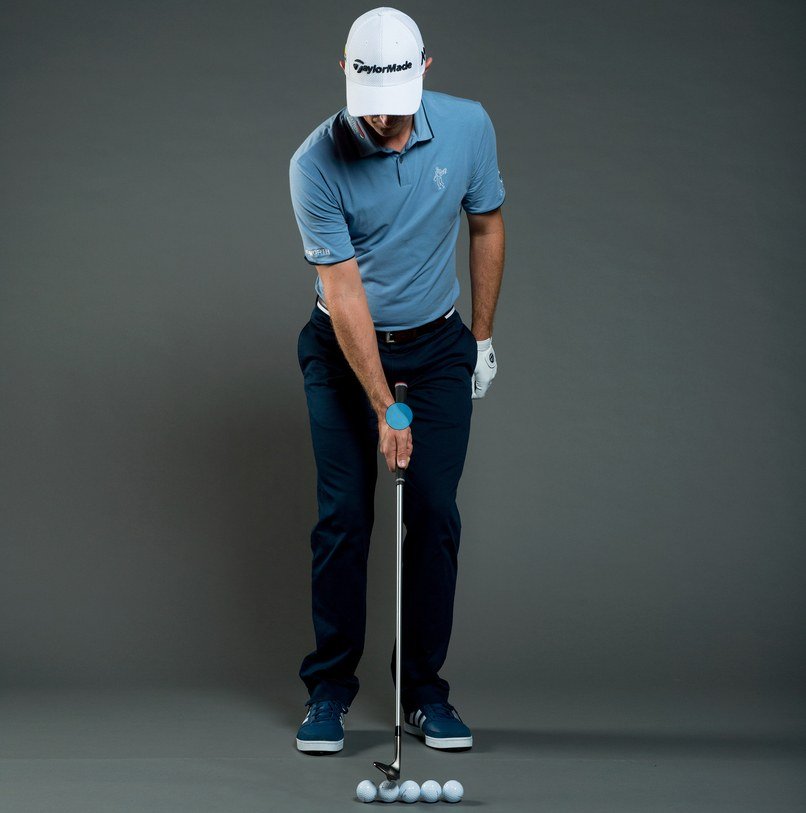
Justin's five ball positions

Justin's first tip is to skip the lob wedge and use a 56° wedge. If you don't have a 56, just use something less than a 60° lob wedge. Justin says you'll make better contact.

You'll want to go check out the article because this one has lots of helpful photos, but the ones above and below really stood out to me. Those five golf balls show the five positions he uses for his shots. As the ball moves farther back in your stance, the ball will fly lower and roll farther.

Note also that Justin keeps the shaft pointed at the center of your body. The photos below show the club relative to the front and back ball positions. It appears that he defines "the center of your body" in terms of his trailing hand, as you can see in the photos below. He says the butt of the club should never lean forward or backward of that point.


So far, all of this is entirely different from what Phil Mickelson would tell you. Phil uses his lob wedge for almost everything, says you should play the ball forward or back, never in the middle of your stance, and prefers to keep the shaft leaning forward until after the ball is struck (he calls it "hinge and hold"). Is one way better than the other?

In a word, NO. Each man has a system that works, and it works because he uses the entire system. So DON'T mix Justin's and Phil's advice. If you want to do it Phil's way, grab a copy of Phil's short game book and do what he says -- ALL OF IT. And if you want to copy Justin's way, do what Justin says -- ALL OF IT. Got it? Good.

The article has more advice from Justin concerning how to control your backswing length, which is how he controls the length of the shot (basically the same way I do in my Accurate Iron Play book), rather than by changing how hard he swings. You'll want to read that while you're looking at the photos because he shows how he measures the length of his backswing. Just look for the blue dots on the photos.

Justin's method is pretty simple and, as you may have noticed during the Olympic Men's Golf, pretty dependable as well. You could do a lot worse than copying his technique

Tuesday, August 16, 2016

My "5 to Watch" at the Olympics--Women

Alright. The men have made their debut, now it's the women's turn to play the Olympic Golf Course.

And it's my turn to do another "5 to Watch."

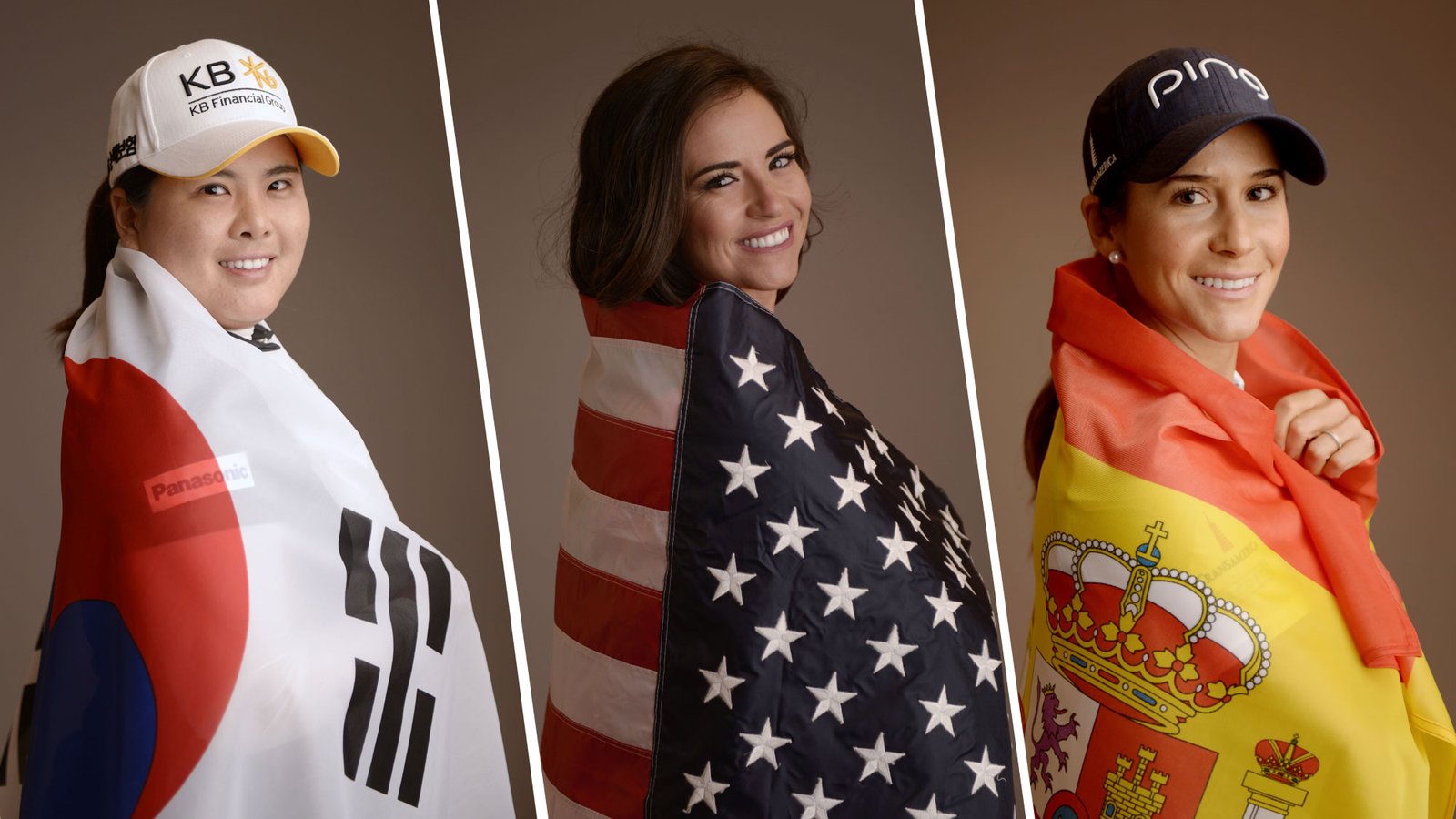
Inbee Park, Gerina Piller and Azahara Munoz ready for Rio

The temptation here is to load up on South Korean picks, since they are the only country with four players... and we know how dominant they are in the Rolex Rankings. However, I think the US men showed how difficult it can be to get even one medal -- perhaps more so for the Koreans, with all the pressure they must feel -- so I'm picking players from a variety of countries.

One obvious point I should address: I haven't picked Inbee Park simply because her thumb injury is a huge red flag for me. It has taken her out of competition for several weeks now and I just don't feel confident that she'll be able to play her best.

The fact that the women's schedule allowed for a couple weeks rest before this event should give a much greater cross-section of the field a chance to win, especially since three of their last four major winners are there (US Women's Open champ Brittany Lang didn't qualify) along with eight of the current Rolex Top10.

So although I'm picking a winner from my "5 to Watch" list, I'll also include a list with another five players I believe are worth keeping an eye on. I left some players off both lists even though I think they have a really good chance this week, like Ariya Jutanugarn, Shanshan Feng and Lexi Thompson (all strong players but somewhat inconsistent). Otherwise, I might as well just go by the Rolex.
  • Lydia Ko has been so consistent over the last year or so that it's impossible to leave her off this list. Add the fact that her short game has remained sharp -- and that short game has proven invaluable at the Olympic Course -- and you have to think she'll be there at the end.
  • Brooke Henderson has been just as consistent as Lydia, and the two seem to be feeding off each other. Again, a few weeks back I felt she was getting tired from playing so much but the break she just had makes me think she'll be ready to go Wednesday morning.
  • Sei Young Kim has that power game going for her, as well as a strong short game. I think that combination makes her a favorite among the Korean players.
  • Anna Nordqvist doesn't chip and pitch as well as the other gals, but she hits lots of greens. Between her GIR and the ability to use the putter off the tight lies in Rio, she should be able to navigate the greens just fine.
  • And for my flier pick, Stacy Lewis gets the nod. Normally I'd question whether Stacy might get in her own way, pressing to break through for another win. But Stacy's game is very much like Matt Kuchar's, and I greatly underestimated his ability to score in Rio. I won't make the same mistake with Stacy -- of the three Americans, she has the most well-rounded game.
And here are five more women who I think could make some noise.
  • Haru Nomura has quietly been going about her business this season... with enviable success. She could be the best golfer, male or female, that Japan sent to Rio. I wouldn't be surprised to see her on the medal stand.
  • In Gee Chun started the season on fire, but that freak back injury early on derailed her for a while. She could be the Korean counterpart to Justin Rose this week; the Olympic experience could jumpstart her season.
  • Nicole Broch Larsen from Denmark only has one win on the LET but she was their 2015 Player of the Year. She's coming in under the radar, and that may free her up to show what she can do.
  • Mariajo Uribe has had a rough year, but she's the only golfer, male or female, from Colombia in the Olympics. And in the past she has won the 2007 US Women's Am, the silver medal at the 2014 South American Games and the gold medal at the 2015 Pan American Games. That's a resume that you just can't ignore.
  • And you may have heard Paul McGinley on GC mention Leona Maguire, one of only three amateurs in the field... but I had her on this list before that. I'm a bit more familiar with her game simply because she plays for Duke University, about 90 minutes east of where I live. I won't recite her resume, other than to mention that she's the #1 ranked female amateur in the world. Why shouldn't an amateur win? It's the Olympics!
And my choice to get a medal? Of course I'm picking an American! Tim Rosaforte joked on Live From... that, with so many runner-up finishes over the last two years, Stacy Lewis should be a lock for the silver medal. But I like that way of thinking, for one reason -- as Matt Kuchar made clear, even third place feels great at the Olympics.

I like Stacy to get a medal, any medal... and that may be all she needs to break this runner-up funk she's been in.

Monday, August 15, 2016

The Limerick Summary: 2016 Olympic Men’s Golf

Medals: Justin Rose, Henrik Stenson, Matt Kuchar

Around the wider world of golf: Clariss Guce won the Decatur-Forsyth Classic on the Symetra Tour; Mackenzie Hughes locked up his PGA Tour card by winning the Price Cutter Charity Championship on the Web.com Tour; Ryan Moore won the John Deere Classic on the PGA Tour; and the final round of the US Senior Open has been postponed till Monday after two inches of rain fell over the weekend.

Stenson, Rose and Kuchar pose with their medals

It wasn't what anybody expected, that's for sure. While Henrik Stenson was an early favorite going into the week, Justin Rose was something of a question mark after a back injury earlier this year knocked him off-form, and Matt Kuchar was expected to put up consistent but probably unimpressive scores.

What they actually did slammed the door on all the "what will we do without the stars?" talk:
  • Rose put on a ball-striking exhibition that rivaled Stenson's last few weeks. After posting a hole-in-one during the first round -- the first hole-in-one in the new Olympic golf history -- he never looked back.
  • Stenson continued his own stellar play, scrambling like mad when his normally impeccable ball-striking began to stray. He posted no worse than a 68 in any round.
  • And Kuchar started the final round seven strokes off the lead but shot the lowest score of his professional career -- a 63, tying the new Olympic record set on Thursday by Marcus Fraser -- and nearly contended for the silver medal.
To be honest, this may turn out to be even better than a shootout between the young stars who didn't come. Those young stars have been off their games a bit this year and had their Olympic performances followed suit, the men's competition may have been anticlimactic. Instead, two international major champions staged a battle royale for the top two medals and one incredibly excited bronze medal winner provided the glowing excitement that US golf needed to see.

This week, the women will likely provide the "young vibe" that most hoped the men would bring. After all, their young stars have not only come to Rio but likely brought their games with them since three of this season's major winners are there. But in the meantime, the men get a Limerick Summary -- appropriately decked out in gold, silver and bronze, of course:
In a shocker, Matt Kuchar took bronze.
Though his final round screamed, “Bring it on!”
Henrik Stenson hung tough—
But for gold, not enough;
Tee-to-green, Justin Rose was too strong.
The photo came from this page at PGATOUR.com.

Wednesday, August 10, 2016

My "5 to Watch" at the Olympics--Men

The Olympics golf events present a real challenge, for viewers as well as for the players. 

The rugged beauty of the Olympic Golf Course

This event -- and the women's event next week -- are extremely difficult for me to pick, simply because there are so many unknowns. Those unknowns include not only the lower-ranked players who make up most of the field, but also the psychology of being in the Olympics for the first time, the unfamiliar conditions of the course (different colors and textures of sand in the various bunkers, for instance) and even the shorter preparation time.

Of them all, the psychology could be the real wild card here. As we all know, players who have been under-performing can suddenly "find their games" when put in the position of representing their countries. Whether the additional emotion causes them to focus better, or it gives them an energy jolt, or it just helps their self image because they were chosen, being an Olympian can bring out an Olympian performance. So all the metrics and stats can be rendered meaningless very quickly!

A player's worldwide schedule should also be taken into account. Solid play in a variety of conditions should give some players a leg-up over players who haven't needed to adapt to different conditions as much.

So in the end, my "5 to Watch" is really just my best guess as to which athletes are playing well enough to get that Olympic "bump" in their games:
  • Henrik Stenson is the betting favorite and I can see no reason to leave him out. Henrik has a proven ability to finish once he gets on a roll, and his OPEN and WGC wins certainly qualify! He might even have won the PGA had it not been for the 36-hole final day; even Stenson had to run out of energy eventually. But he's had some time to recuperate since then, and I expect him to be ready this week.
  • Thongchai Jaidee may be the oldest player in the field, but he's been playing well of late -- especially in tropical climates. His win at the Open de France a few weeks back may well be the biggest win of his career. And he's 2-0 when he's needed to win a playoff. He has the mental make-up for a big stage like this.
  • Sergio Garcia has been playing very solidly for many months now, including a win at the AT&T Byron Nelson earlier this year, which is held at a windy course in Texas. Add the way his play seems to pick up when he gets in a team competition -- which certainly describes the Olympics -- and I can see him getting it done in a big way.
  • Emiliano Grillo is my "young guy" pick. An emotional player with a win at the Frys.com Open last October, Emiliano's game has been sporadic until the last few weeks. At the Bridgestone, THE OPEN and the PGA he posted T14, T13 and T12, respectively. Is it because he realized he had probably locked up his Olympic bid and he stopped pressing? I don't know. But I do know that he -- like Sergio -- is an emotional player, and he's from Argentina, not all that far from Rio. The psychological effects could be huge for him.
  • Finally, Patrick Reed is my flier pick. I don't think the US team is as strong as some of the others -- only Bubba has won lately, but he's only had two Top25s since March. So when I look at the team, I find myself watching Patrick. He's from Texas, and his game is well-suited to the windy conditions. His consistency is up this year, and he's gone T10-T12-T13-T11 in his last four starts (Scottish Open, OPEN, PGA, Travelers). And he's proven that he can handle the big moment, especially when representing his country.
Look, there are any number of players I could have put in this list. For example, I really like Martin Kaymer's chances and I think Alex Cejka could be a real sleeper pick. But I'm an American, so I'm picking Patrick Reed to upset the field this week.

Even if he doesn't take the gold, I think he may get a medal of some sort.

Friday, June 24, 2016

Strengthening the Olympic Golf Field

Yesterday I wrote about some of the Olympic concerns affecting golfers and why so many seem to be saying "no, thanks" to the Games. It was late at night when I finished the post and my mind was tired, so I didn't always go into depth about the effects of these concerns. But you can already see how they are shaping a lot of the dialogue:
  • For example, when Graeme McDowell withdrew Thursday with Zika concerns over his pregnant wife. How could the unknown future cost of Zika exposure affect your child's or your spouse's future?
  • Or when traditional Olympic athletes say they don't want athletes at the Games who don't want to be there. What do you expect from athletes whose careers are defined by the Olympics? Tiger Woods is currently suffering the effects of winning at any cost. What risks might he have been willing to take if he only got one chance every four years at a major, and that one chance might be his only chance?
  • The concern over an overcrowded schedule is the flipside of the 'get one chance' Olympic athlete. If I'm going to risk my health to get one big prize, is the Olympic gold really the best prize for a golfer? As things stand, I honestly don't think it is.
I'd like to address that last one. Yesterday I questioned how valuable an Olympic gold would be when valued against a major. Today I'd like to look at some potential ways to narrow that gap by improving the strength of the field.

As things are structured right now, there are 60 golfers in each gender's field. These represent, on average, somewhere between 25 and 35 countries. The International Golf Federation website describes their eligibility this way:
The IOC has restricted the IGF to an Olympic field of 60 players for each of the men’s and women’s competition. The IGF will utilise the official world golf rankings to create the Olympic golf rankings as a method of determining eligibility. The top-15 world-ranked players will be eligible for the Olympics, with a limit of four players from a given country. Beyond the top-15, players will be eligible based on the world rankings, with a maximum of two eligible players from each country that does not already have two or more players among the top-15.
In addition, the host country gets one male and one female participant if they are otherwise ineligible.

I understand that the IGF wants to keep any one nation from having a disproportionate number of players in the Games, but in doing so they completely ignored field strength. Olympic athletes are, by definition, supposed to be the best in the world. But since the IGF criteria for participation eliminates the majority of the best players in the world rankings, there is no way the Olympic gold medalist can possibly lay claim to being 'the best in the world'.

Can you say 'just an exhibition'?

So how do we fix this?

1) At the very least, the Olympic fields MUST allow the Top15 in the world rankings to play, regardless of what country they come from. That is the minimum you can do. Otherwise your field isn't even as strong as the Hero World Challenge.

If one of those Top15 players is unavailable -- for example, #3 Inbee Park might not be able to play because of her hand injury -- then #16 automatically qualifies, and it doesn't matter what countries they represent. In this case, Gerina Piller would be her replacement -- an American replacing a South Korean. That is irrelevant -- we want the 15 best players available to ensure the strongest possible field.

What if that means one country has ten players in the Games? Then so be it. If one country dominates the game that much, then that country must be beaten in order to claim the 'best in the world' title. Again, as things now stand, South Korea would have seven in the women's field, the US would have six in the men's field. But now you have the truly dominant players in these fields, and you MUST beat the best to get the gold.

Please note that these Top15 make up only a quarter of the entire field. You could still have just as many countries represented as in the current eligibility requirements, but the fields are substantially stronger.

2) Go to a match play format. I know this was rejected because it was considered too cumbersome. But team match play might be the best way to ensure a real competition and build excitement for the event.

I'd go to two-player teams, and I'd expand the Top15 to a Top16. Every player in the Top16 would play, and the teams would be constructed this way:
  • If a country has only one player in the Top16, that player would team up with the next highest player from their country outside the Top16.
  • If a country has two players in the Top16, they form a team.
Now it gets interesting:
  • If a country has three or more players in the Top16, you divide the number in half and round up. For example, three players means you get two teams and the top two players from that country head up the teams. In the examples I gave above, South Korea would have four female teams and the US would have three male teams. You get the extra player for the final team from outside the Top16.
But the second member of those teams is a matter of choice. Let's say you have three players in the Top16, so you get two teams. The two top players must be on separate teams, but the top player can decide to team up with the lowest-ranked player on the team if he (or she) so desires. This allows for a little choice in chemistry.

I really like the idea of making the match play event solely alternate shot (or foursomes, if you prefer that term) so the team aspect REALLY stands out. And bear in mind that such a two-player team match play event could include twice the number of individual golfers without seriously affecting pace of play. It would also be much more exciting.

You would start with either 32 teams (64 total players) or 64 teams (128 players) -- the first would take five days of play, the second would take six days. You divide into groups of four teams for pool play. Here's how it would work:
  • For 32 teams:
    Eight groups of four teams for three days of pool play. Top two teams from each group go to single elimination. Day four has 36 holes, cutting the 16 to 8 (morning) and then the 8 to 4 (evening). Day five also has 36 holes, cutting the 4 to 2 (morning) and then having the Gold medal and Bronze medal matches that afternoon.
  • For 64 teams:
    Sixteen groups of four teams for three days of pool play. Top team from each group goes to single elimination. Day four cuts 32 to 16. Day five has 36 holes, cutting the 16 to 8 (morning) and then the 8 to 4 (evening). Day six also has 36 holes, cutting the 4 to 2 (morning) and then having the Gold medal and Bronze medal matches that afternoon.
Yes, these are longer than the four-day medal play that we'll be playing this time. But this is the Olympics, it's supposed to be a challenge. 'Best in the world', remember?

3) Eliminate the world rankings entirely and institute national tryouts, the way other sports do it. Yes, this is a radical solution but I think it's probably the best for the Olympic Games. It certainly fits the spirit of the Games.

Let's find the best for this event with an open competition. Let's have local and regional qualifiers, culminating in a national qualifier. Open it to the pros and amateurs alike. If you want to get players who WANT to go to the Olympics, this is the way.

And just imagine the potential teams for a match play Olympics event. Suppose pro Dustin Johnson has been playing some rounds with amateur Maverick McNealy and the two really like their chemistry, so they enter the qualifiers as a team. You're NEVER going to get a team like that with the current system!

There are any number of ways that the luster of the Olympic gold medal can be enhanced among golfers, but it has to start with a stronger field. When you have four major events every year with stronger fields than a single Olympic event, there really is no competition.

Thursday, June 23, 2016

Is Rory's Olympic Withdrawal a Symptom of Something Deeper?

Brian Wacker did an article for Golf Digest about Rory's withdrawal from Olympic consideration and how it might affect things going forward. It does a good job of touching on some of the effects his decision may have on other golfers, especially when added to those who have already withdrawn and who sound less certain than they did a few months ago.

Wacker also lists some of the reasons golfers may be cooling toward Rio itself. I had already been thinking about all of these things, and I have a few thoughts of my own to add -- things which may or may not have been considered by those in charge.

Olympic rings

First, I do think the Zika virus is a larger concern than many of the Olympic supporters realize. For example, History Channel did a special on the Black Plague, and the last ten minutes or so were devoted to explaining how some unknown virus could rapidly spread around our modern world. This sort of documentary isn't unusual, and the dangers of a 'killer virus' are common movie themes. For Pete's sake, many zombie movies assume that a virus is the cause of the zombies!

Such things are firmly in the back of the public's mind, and the fact that virtually no one had even heard of Zika two years ago -- along with its rapid appearance in the US and the lack of knowledge about its long-term risks going forward -- make it one more uncertainty to be dealt with.

Wacker mentions Rory's recent statement that he “...had this argument with someone last week talking about golf being in the Olympics and how it can grow the game, but fencing is in the Olympics, and how many people watch that?” I wonder if that isn't a symptom of a much larger issue that hasn't been considered.

You see, the majority of Olympic sports don't have the professional power base that golf has. True, basketball, hockey, tennis, baseball and soccer are sports that do. Other sports like cricket and rugby have followings, although they aren't on the level of, say, basketball. But other sports like track and field, or swimming, or table tennis are sports that primarily gear toward the Olympics. The system of meets and competitions that exists for these events is aimed toward Olympic qualification. They happen only rarely during the year, and they pit the best in each country against each other. Most of these athletes know each other when they finally reach the Olympics, and are used to competing against each other.

And that raises the question of the value of an Olympic medal to a golfer. This one has been seriously underestimated. The criteria for Olympic qualification in most sports is considerably different than the golf qualification... and this raises valid questions that have been ignored.

In swimming, for example, most of the Top30 or Top40 in the world will make it to their next Olympics. If you win the gold medal in a swimming event, you have legitimately beaten the best in the world.

But will most of the Top50 in the world be competing in the golf competitions? Not hardly. Let's look at the women's teams, using these Olympic qualification charts for June 20 in this golf.com article and compare them with the Rolex World Rankings for the same week, since none of the women have as yet withdrawn. As things stand currently:
  • Ha-Na Jang at #8 in the Rolex doesn't qualify at all, due to the four-player limit in the Top15, nor does So Yeon Ryu at #11. In fact, seven Koreans in the Top25 will not be allowed to play.
  • Four Americans in the Top25, beginning with Gerina Piller at #16, will not be at the Olympics.
So 11 of the Top25 in the Rolex aren't even allowed to play. Going further down:
  • Catriona Matthew, #67 in the Rolex, is #27 in the Olympic list.
  • Nicole Broch Larsen, #88 in the Rolex, is #30 in the Olympic list.
  • Laetitia Beck, #220 in the Rolex, is #41 in the Olympic list.
So 40 of the Top67 in the Rolex aren't allowed to play. And 58 of the Top88 aren't allowed to play. And 179 of the Top220 aren't allowed to play.

Now I understand that the field has to be limited and you can't very well have only ten nations participating in an Olympic event, so don't misunderstand me. I'm not arguing that all these other players should be in the Olympics.

What I AM saying is that this event won't even have the strength of a 'regular' LPGA event. If Rolex #1 Lydia Ko wins the gold medal, how can you legitimately compare it to winning a major?

For the men, the disparity is not quite as great but it's still troubling. Victor Dubuisson, #71 in the OWGR, is #30 in the Olympic list. Graham DeLaet is #136 in the OWGR but #41 in the Olympic list. You could make a fair argument that the limited field of the Hero World Challenge is stronger than the Olympic field... and yet purists complain because the Hero gets world ranking points!

And we already have a number of players -- like Rory -- who have withdrawn from the event. How much will Olympic gold weigh against a major in the years to come?

It's possible that Olympic exposure might help grow the game in parts of the world where it currently receives very little support. But not even the Jamaican bobsled team, popular enough to have a movie made about it, caused serious growth in that event among the nations that weren't already involved. And building a golf infrastructure in nations that don't have one will not be cheap. It will certainly cost more than a couple of competitive bobsled designs and a few trips to a bobsled track.

I don't mean this to be a damper on all the Olympic enthusiasm. I hope golf succeeds beyond its wildest dreams. But golf has been left out of the Olympics for over a century while table tennis and curling held on to their spots (and yes, I enjoy the curling competitions), and it has a seriously bourgeois reputation to boot. That's a lot to overcome under any circumstance, let alone an Olympics troubled with security and health concerns.

So is it any wonder that Rory's concerns over Zika finally won out? I don't think so. Perhaps Rio, with all its problems, was the wrong Olympics for golf to enter. Hopefully we get more than one chance before the Olympic Committee pulls the plug on this experiment.

Wednesday, January 8, 2014

Lindsey Vonn Makes Golf News

Since skier Lindsey Vonn is Tiger's girlfriend -- and since Tiger was expected to skip several weeks of golf during the Sochi Olympics next month -- Lindsey's surprise announcement yesterday opened all kinds of possibilities.

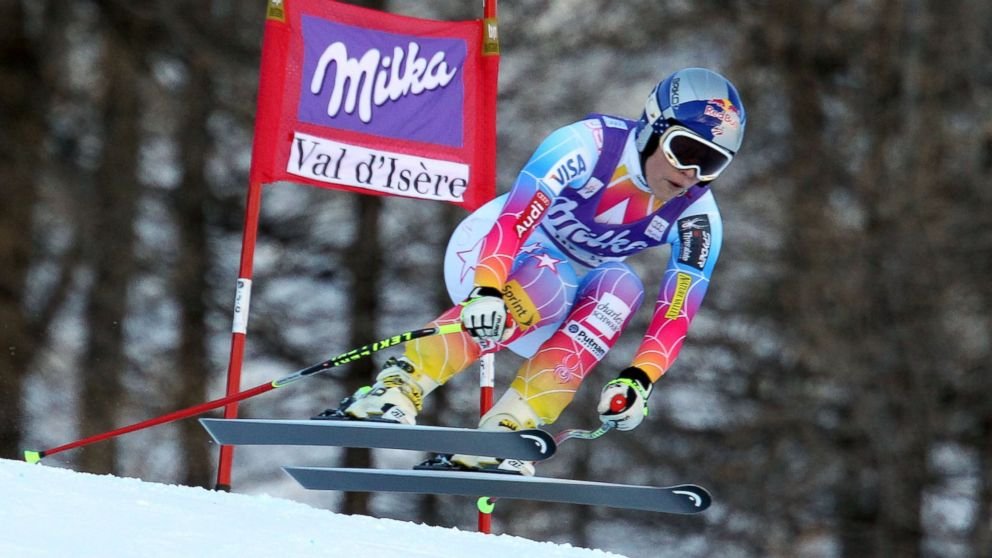
Lindsey Vonn in action

In case you missed the news, here's a quick summary from this ESPN article:
Vonn tore two ligaments in her right knee during a high-speed crash at the world championships this past February, sidelining her for about 10 months. She retore her surgically repaired ACL in a training crash in November, a key setback. Then, after returning to competition in early December by finishing 40th, 11th and fifth in a set of World Cup races at Lake Louise, Alberta, Vonn sprained her MCL during a race last month at Val d'Isere, France.
Then, later in that same article:
After skiing in two downhills and a super-G at Lake Louise, Vonn sounded optimistic, declaring she would be in Sochi, "fighting for my medal."
But a couple of weeks later in France, during a downhill -- with Woods watching in the finish area -- Vonn lost her balance, sending her left ski into the air and forcing all her weight onto her right knee. She grimaced as she pulled up, then clutched her right knee.
[Her publicist, Lewis] Kay said Tuesday that an MRI after that episode "showed an MCL sprain, which coupled with the torn ACL has made it impossible to stabilize her knee and be ready to safely ski again next month."
So that's it. Lindsey will have surgery again soon and aim for a return at the 2015 World Championships in Colorado. (The article contains considerably more info and is well worth a read.)

And here's where Lindsey makes golf news. While it's clear that Tiger will be spending time with Lindsey and trying to help her recover, this has potentially changed his schedule. He had made no secret that he intended to be at the Sochi Olympics to support Lindsey; since she won't be there, it opens up three potential appearance dates for him, according to this Golfweek article:
  • Feb 6-9: The AT&T Pebble Beach National Pro-Am
  • Feb 13-16: The Northern Trust Open
  • Feb 19-23: The WGC-Accenture Match Play Championship
Will he actually add one or more of them to his schedule? Well, if the past is any indication, he typically plays the Accenture and he played the AT&T once in 2012. And I'd guess Lindsey would be a month or so past her surgery by then, so she may even push him to go play and get out of the house!

At the very least, we'll be seeing Lindsey at more golf tournaments as her recovery progresses. And one thing's for certain -- Tiger seems to play very well when Lindsey's around.

That could bode well for him in the majors this year. Very well indeed.

The photo came from this ABCNews article about Lindsey's announcement.

Saturday, July 28, 2012

The Olympics Are Here!

On the outside chance you didn't see this, let me just say that there was no way I could follow this with a post. In case you missed it...

This is the BBC's broadcast. The movie that starts the clip was being seen by the people in the Olympic Arena, as James Bond escorts the Queen to the Olympic opening ceremony. (Yes, it's the real Queen, and it was shot at the real Buckingham Palace. Even the Queen's pet Corgis are in it.) Just after the 4:40 mark the video begins cutting back and forth between the film being seen in the arena and the actual arrival of the helicopter...


I hope you didn't miss the Churchill statue!

I wish I could have found NBC's clip, as they followed "the Queen" all the way down and you could see her land behind the area from which she entered the arena. Alas, I had to do this post before their clip had time to reach YouTube.

In case you're interested, here's an article with more detail on the film.

But like I said, I simply couldn't follow this. It's one of the coolest things any Olympic presenter has ever done! I'll get back to golf tomorrow.